

The Magic8 Pro Air may not be the thinnest phone on the market, but in contrast to a Samsung Galaxy S25 Edge and Apple iPhone Air, lovers of light and handy smartphones have to make far fewer compromises with the Honor phone.
The cameras of the Magic8 Pro Air in particular are surprisingly good and in a different league compared to the Apple phone. The same applies to the battery and its ability to get the smartphone through the day. Here, Honor does an excellent job.
The sluggish USB port and the slight throttling of the Dimensity 9500 out of the box do not quite fit the otherwise uncompromising compact flagship concept. The limited availability, along with the resulting uncertainty over updates and warranty coverage, should also be taken into account before making a purchase via import.
Pros
+ high-quality housing with IP69 rating
+ light & thin
+ beautiful OLED screen with PWM dimming
+ good cameras
+ quite large battery + good battery life
Cons
– uSB 2.0 only
– lack of availability for Europe
– Throttling ex works & under load
– Uncertainty with update supply

The Honor Magic8 Pro Air will likely remain exclusive to China, although the Chinese version also comes with a multilingual package. Import prices start at roughly €700 (approx. $808) from retailers such as Trading Shenzhen.
Translator’s note: Honor smartphones are not officially available in North America.
Processor
MediaTek Dimensity 9500 8c/8t, 1 x 4.2 GHz ARM C1-Ultra, 3 x 3.5 GHz ARM C1-Premium, 4 x 2.7 GHz ARM C1-Pro, Cortex-X930 Travis / Cortex-A730 6x Gelas
Display
6.31 inch 19.5:9, 2640 x 1216 pixel 461 PPI, Capacitive touchscreen, OLED, glossy: yes, HDR, 120 Hz
Storage
512 GB UFS 4.1 Flash, 512 GB
, 456 GB free
Connections
1 USB 2.0, USB-C Power Delivery (PD), 1 Infrared, Audio Connections: USB C, 1 Fingerprint Reader, NFC, Brightness Sensor, Sensors: accelerometer, gyro, proximity, compass, OTG, Miracast
Networking
802.11 a/b/g/n/ac/ax/be (a/b/g/n = Wi-Fi 4/ac = Wi-Fi 5/ax = Wi-Fi 6/ Wi-Fi 6E 6 GHz be = Wi-Fi 7), Bluetooth 6.0, 5G: n1, n2, n3, n5, n7, n8, n12, n18, n20, n26, n28b, n28a, n38, n40, n41, n48, n66, n77, n78, n79, n80, n81, n83A, n84; 4G: B1, B2, B3, B4, B5, B7, B8, B12, B13, B17, B18, B19, B20, B26, B28b, B28a, B38, B40, B41, B42, B66; 3G: 850/1900/2100 MHz; 2G: 850/900/1800/1900 MHz, Dual SIM, LTE, 5G, GPS
Size
height x width x depth (in mm): 6.1 x 150.5 x 71.9 ( = 0.24 x 5.93 x 2.83 in)
Battery
5500 mAh Lithium-Polymer
Charging
wireless charging, fast charging / Quickcharge
Operating System
Android 16
Camera
Primary Camera: 50 MPix (f/1.6, 23 mm, OIS, 1/1,3 inch) + 64 MPix (3.2x optical zoom, f/2.6, 74 mm, OIS) + 50 MPix (f/2.2, 16 mm, ultrawide)
Secondary Camera: 50 MPix (f/2.0, 21 mm)
Additional features
Speakers: Stereo, Keyboard: Virtual keyboard, charger, USB cable, info material, Magic OS, 12 Months Warranty, widevine L1, IP69, HDR: Doly Vision, HDR10, HDR10+, HLG, GPS (L1+L5), BDS (B1I+B1c+B2a+B2b), GALILEO (E1+E5a+E5b), QZSS (L1+L5), NavIC (L5), GLONASS, fanless
Weight
155 g ( = 5.47 oz / 0.34 pounds)
Note: The manufacturer may use components from different suppliers including display panels, drives or memory sticks with similar specifications.

ⓘ Honor
Despite its plastic back, the Magic8 Pro Air feels quite premium. Thanks to its compact dimensions and slim display bezels, the Honor smartphone, at just 6.1 millimeters thick, sits very comfortably in the hand. Despite its aluminum frame and large battery, this slim high-end phone deserves the “Air” suffix in its name, as the Magic8 Pro Air is even 10 grams lighter than an iPhone Air, although the latter has a comparatively tiny battery and no IP69 rating.
The compact form factor is barely noticeable in the feature set, too. An IR blaster, fast wireless charging at up to 50 watts, wireless reverse charging, 80-watt wired charging, and a very good ultrasonic fingerprint sensor are all included. The only real drawback is the slow USB 2.0 port, which does not support video output.
{element.classList.add(‘hideEl’)});document.getElementById(‘showDeviceSizelabel_358929’).checked = false;document.querySelectorAll(‘#showDeviceSize_349372’).forEach(element => {element.classList.add(‘hideEl’)});document.getElementById(‘showDeviceSizelabel_349372’).checked = false;document.querySelectorAll(‘#showDeviceSize_348483’).forEach(element => {element.classList.add(‘hideEl’)});document.getElementById(‘showDeviceSizelabel_348483’).checked = false;document.querySelectorAll(‘#showDeviceSize_358927’).forEach(element => {element.classList.add(‘hideEl’)});document.getElementById(‘showDeviceSizelabel_358927’).checked = false;document.querySelectorAll(‘#showDeviceSize_a6’).forEach(element => {element.classList.add(‘hideEl’)});document.getElementById(‘showDeviceSizelabel_a6’).checked = false;return false;” title=”hide all”>❌
The Magic8 Pro Air supports Wi-Fi 7, but in combination with our reference router, the Asus ROG Rapture GT-AXE11000, its data transmission rates when sending are fairly low. Reception also shows room for software optimization due to the fluctuations we observed.
The Honor smartphone supports all modern cellular standards and offers broad band coverage. Even the Chinese version should pose no problems in German-speaking markets.
| Networking | |
| Honor Magic8 Pro Air 802.11 a/b/g/n/ac/ax/be |
|
| iperf3 transmit AXE11000 6GHz |
760 (min: 648) MBit/s ∼41% |
| iperf3 receive AXE11000 6GHz |
1569 (min: 1025) MBit/s ∼100% |
| Samsung Galaxy S25 Edge 802.11 a/b/g/n/ac/ax/be |
|
| iperf3 transmit AXE11000 |
898 (min: 453) MBit/s ∼94% |
| iperf3 receive AXE11000 |
810 (min: 798) MBit/s ∼54% |
| iperf3 transmit AXE11000 6GHz |
1870 (min: 1828) MBit/s ∼100% |
| iperf3 receive AXE11000 6GHz |
1500 (min: 1463) MBit/s ∼96% |
| Motorola Signature 802.11 a/b/g/n/ac/ax/be |
|
| iperf3 transmit AXE11000 |
772 (min: 566) MBit/s ∼81% |
| iperf3 receive AXE11000 |
1513 (min: 1099) MBit/s ∼100% |
| iperf3 transmit AXE11000 6GHz |
897 (min: 688) MBit/s ∼48% |
| iperf3 receive AXE11000 6GHz |
1489 (min: 1425) MBit/s ∼95% |
| Apple iPhone Air 802.11 a/b/g/n/ac/ax/be |
|
| iperf3 transmit AXE11000 |
903 (min: 652) MBit/s ∼94% |
| iperf3 receive AXE11000 |
739 (min: 702) MBit/s ∼49% |
| iperf3 transmit AXE11000 6GHz |
1661 (min: 1520) MBit/s ∼89% |
| iperf3 receive AXE11000 6GHz |
1281 (min: 1244) MBit/s ∼82% |
| Average 802.11 a/b/g/n/ac/ax/be |
|
| iperf3 transmit AXE11000 |
956 (min: 595) MBit/s ∼100% |
| iperf3 receive AXE11000 |
1040 (min: 459) MBit/s ∼69% |
| iperf3 transmit AXE11000 6GHz |
1289 (min: 508) MBit/s ∼69% |
| iperf3 receive AXE11000 6GHz |
1507 (min: 719) MBit/s ∼96% |
| Average of class Smartphone |
|
| iperf3 transmit AXE11000 |
662 (min: 52.5) MBit/s ∼69% |
| iperf3 receive AXE11000 |
696 (min: 52.2) MBit/s ∼46% |
| iperf3 transmit AXE11000 6GHz |
1238 (min: 287) MBit/s ∼66% |
| iperf3 receive AXE11000 6GHz |
1402 (min: 339) MBit/s ∼89% |
Honor Magic8 Pro Air 802.11 a/b/g/n/ac/ax/be; iperf3 transmit AXE11000 6GHz: Ø760 (648-907) MBit/s
Apple iPhone Air 802.11 a/b/g/n/ac/ax/be; iperf3 transmit AXE11000 6GHz; iperf 3.1.3: Ø1661 (1520-1688) MBit/s
Honor Magic8 Pro Air 802.11 a/b/g/n/ac/ax/be; iperf3 receive AXE11000 6GHz: Ø1569 (1025-1737) MBit/s
Apple iPhone Air 802.11 a/b/g/n/ac/ax/be; iperf3 receive AXE11000 6GHz; iperf 3.1.3: Ø1281 (1244-1302) MBit/s
Apple iPhone Air 802.11 a/b/g/n/ac/ax/be; iperf3 transmit AXE11000; iperf 3.1.3: Ø903 (652-956) MBit/s
Apple iPhone Air 802.11 a/b/g/n/ac/ax/be; iperf3 receive AXE11000; iperf 3.1.3: Ø738 (702-770) MBit/s
The Magic8 Pro Air ships with Android 16 and Honor’s MagicOS 10 user interface. Despite being the Chinese version, the system language can be set to German.
The security patches are up to date. However, we were unable to determine exactly how long the Air, as a China-only model, will receive updates. The manufacturer will likely follow the policy of its Pro model, which is expected to receive support outside Europe for four years.
The Honor smartphone comes in outer packaging that appears to be plastic-free. The company does not provide any information on sustainability.

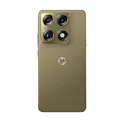
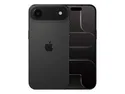
The rear camera module is visually reminiscent of Apple’s counterpart, but it delivers substantially higher image quality. Although Honor’s Air model does not use the same main camera as the Magic8 Pro, its sensor is similarly large at 1/1.3 inches.
The Magic8 Pro Air takes genuinely good photos, and given its compact, slim design, they are even very good. A comparison with the sample photos from the iPhone 17, which uses the same main camera as the iPhone Air, reveals a clear class difference. Even in daylight, the Honor phone delivers more detail, better dynamic range, and less artificial sharpening.
Unlike Apple’s Air model, which relies on a single-camera setup, the Magic8 Pro Air includes a very capable 50 MP ultra-wide camera and a periscope telephoto lens with OIS. The latter offers 64 MP and 3.2x optical zoom. Telephoto shots are quite appealing at up to 5x zoom and add real value, especially for portraits.
Image comparison
Choose a scene and navigate within the first image. One click changes the position on touchscreens. One click on the zoomed-in image opens the original in a new window. The first image shows the scaled photograph of the test device.
Main cameraMain cameraLow LightWide angle

click to load images

8.8 ∆E
10.8 ∆E
12.1 ∆E
13.1 ∆E
10.7 ∆E
8.2 ∆E
6.5 ∆E
8.9 ∆E
12.5 ∆E
5.6 ∆E
8.8 ∆E
4.7 ∆E
7.8 ∆E
6.6 ∆E
9.4 ∆E
4.1 ∆E
9 ∆E
10.4 ∆E
11.3 ∆E
11.4 ∆E
11 ∆E
9.3 ∆E
4.6 ∆E
4.7 ∆E

12.2 ∆E
11 ∆E
12.9 ∆E
14.9 ∆E
17 ∆E
18.5 ∆E
11.9 ∆E
9.4 ∆E
9.1 ∆E
11.6 ∆E
17.3 ∆E
20.3 ∆E
9.2 ∆E
13.9 ∆E
8.3 ∆E
14.9 ∆E
15 ∆E
17 ∆E
12.2 ∆E
12.2 ∆E
15.6 ∆E
18.7 ∆E
17.4 ∆E
12.8 ∆E
The 6.31-inch LTPO OLED display runs at up to 120 Hz and reaches a peak brightness of just under 1,700 cd/m² in our measurements. That puts it in line with the manufacturer’s claimed 1,800 nits in HBM mode. Honor also lists up to 6,000 nits as a peak value in PBM mode, which means the Magic8 Pro Air, like the Magic8 Pro, should become significantly brighter when displaying HDR content.
Thanks to high-frequency PWM dimming at 4,320 Hz, the OLED panel is comparatively easy on the eyes. However, the low base frequency of just 120 Hz means that discomfort cannot be ruled out for sensitive users.
Color reproduction in the Calman measurements is very accurate, and differences from the reference colors are not visible to the naked eye.
| 1299 cd/m² |
1302 cd/m² |
1312 cd/m² |
||
| 1321 cd/m² |
1324 cd/m² |
1319 cd/m² |
||
| 1311 cd/m² |
1305 cd/m² |
1306 cd/m² |
||
Distribution of brightness
tested with X-Rite i1Pro 3
Maximum: 1324 cd/m² (Nits) Average: 1311 cd/m² Minimum: 1 cd/m²
Brightness Distribution: 98 %
Center on Battery: 1324 cd/m²
Contrast: ∞:1 (Black: 0 cd/m²)
ΔE ColorChecker Calman: 0.93 | ∀{0.5-29.43 Ø4.68}
ΔE Greyscale Calman: 1.5 | ∀{0.09-98 Ø4.93}
98% sRGB (Calman 2D)
Gamma: 2.224
CCT: 6383 K
| Honor Magic8 Pro Air OLED, 2640×1216, 6.3″ |
Samsung Galaxy S25 Edge Dynamic AMOLED 2X, 3120×1440, 6.7″ |
Motorola Signature AMOLED, 2780×1264, 6.8″ |
Apple iPhone Air OLED, 2736×1260, 6.5″ |
|
|---|---|---|---|---|
| Screen |
-93% |
-27% |
-25% |
|
| Brightness middle (cd/m²) |
1324 |
1399 6% |
1561 18% |
1060 -20% |
| Brightness (cd/m²) |
1311 |
1371 5% |
1547 18% |
1064 -19% |
| Brightness Distribution (%) |
98 |
94 -4% |
99 1% |
98 0% |
| Black Level * (cd/m²) | ||||
| Colorchecker dE 2000 * |
0.93 |
3.9 -319% |
1.46 -57% |
1.3 -40% |
| Colorchecker dE 2000 max. * |
2.07 |
6.3 -204% |
3.63 -75% |
3 -45% |
| Greyscale dE 2000 * |
1.5 |
2.1 -40% |
2.5 -67% |
1.9 -27% |
| Gamma |
2.224 99% |
2.01 109% |
2.144 103% |
2.2 100% |
| CCT |
6383 102% |
6506 100% |
6612 98% |
6519 100% |
* … smaller is better
Screen Flickering / PWM (Pulse-Width Modulation)
ℹ
To dim the screen, some notebooks will simply cycle the backlight on and off in rapid succession – a method called Pulse Width Modulation (PWM) . This cycling frequency should ideally be undetectable to the human eye. If said frequency is too low, users with sensitive eyes may experience strain or headaches or even notice the flickering altogether.
| Screen flickering / PWM detected | 120 Hz Amplitude: 12 % |
 |
|
|
The display backlight flickers at 120 Hz (worst case, e.g., utilizing PWM) . The frequency of 120 Hz is very low, so the flickering may cause eyestrain and headaches after extended use. In comparison: 52 % of all tested devices do not use PWM to dim the display. If PWM was detected, an average of 7572 (minimum: 5 – maximum: 343500) Hz was measured. |
|||
Measurement series with fixed zoom level and different brightness settings (The amplitude curve at minimum brightness looks flat, but this is due to the scaling. The info box shows the enlarged version of the amplitude at minimum brightness)
Display Response Times
ℹ
Display response times show how fast the screen is able to change from one color to the next. Slow response times can lead to afterimages and can cause moving objects to appear blurry (ghosting). Gamers of fast-paced 3D titles should pay special attention to fast response times.
| ↔ Response Time Black to White | ||
|---|---|---|
| 0.6 ms … rise ↗ and fall ↘ combined | ↗ 0.3 ms rise |
 |
| ↘ 0.3 ms fall | ||
| The screen shows very fast response rates in our tests and should be very well suited for fast-paced gaming. In comparison, all tested devices range from 0.1 (minimum) to 240 (maximum) ms. » 1 % of all devices are better. This means that the measured response time is better than the average of all tested devices (19.6 ms). |
||
| ↔ Response Time 50% Grey to 80% Grey | ||
| 0.8 ms … rise ↗ and fall ↘ combined | ↗ 0.4 ms rise |
 |
| ↘ 0.4 ms fall | ||
| The screen shows very fast response rates in our tests and should be very well suited for fast-paced gaming. In comparison, all tested devices range from 0.13 (minimum) to 636 (maximum) ms. » 3 % of all devices are better. This means that the measured response time is better than the average of all tested devices (30.7 ms). |
||
Despite its thin and compact form factor, the MediaTek Dimensity 9500 performs about as consistently in the stress tests as the larger flagship phones, and the Air model also fares very well in terms of absolute performance. However, Honor appears to throttle the high-end chipset slightly out of the box, as the Oppo Find X9 Pro and Vivo X300 Pro post higher scores in benchmark testing.
Even so, the Magic8 Pro Air feels very smooth in everyday use. The ARM Mali G1-Ultra GPU also promises plenty of graphics power for gaming. More than 60 fps in GFXBench’s 4K test is an impressive result for a compact flagship.
Compared with the “mini batteries” of its ultra-thin rivals, the Magic8 Pro Air’s 5,500 mAh battery is very generously sized. In our battery test, the compact Honor phone lasted for more than 20 hours.
| Geekbench 6.7 | |
| Single-Core | |
| Apple iPhone Air Apple A19 Pro, A19 Pro 5-Core GPU, 12288 |
3785 Points +11% |
| Average MediaTek Dimensity 9500 (3181 – 3635, n=9) |
3418 Points +1% |
| Honor Magic8 Pro Air MediaTek Dimensity 9500, Mali-G1 Ultra MC12, 16384 |
3397 Points |
| Samsung Galaxy S25 Edge Qualcomm Snapdragon 8 Elite for Galaxy, Adreno 830, 12288 |
3105 Points -9% |
| Motorola Signature Qualcomm Snapdragon 8 Gen 5, Adreno 829, 16384 |
2908 Points -14% |
| Average of class Smartphone (196 – 4733, n=184, last 2 years) |
1868 Points -45% |
| Multi-Core | |
| Honor Magic8 Pro Air MediaTek Dimensity 9500, Mali-G1 Ultra MC12, 16384 |
10166 Points |
| Average MediaTek Dimensity 9500 (9402 – 10941, n=9) |
10162 Points 0% |
| Samsung Galaxy S25 Edge Qualcomm Snapdragon 8 Elite for Galaxy, Adreno 830, 12288 |
9941 Points -2% |
| Motorola Signature Qualcomm Snapdragon 8 Gen 5, Adreno 829, 16384 |
9678 Points -5% |
| Apple iPhone Air Apple A19 Pro, A19 Pro 5-Core GPU, 12288 |
9509 Points -6% |
| Average of class Smartphone (830 – 12854, n=184, last 2 years) |
5664 Points -44% |
| 3DMark | |
| Wild Life Unlimited Score | |
| Samsung Galaxy S25 Edge Qualcomm Snapdragon 8 Elite for Galaxy, Adreno 830, 12288 |
27493 Points +2% |
| Honor Magic8 Pro Air MediaTek Dimensity 9500, Mali-G1 Ultra MC12, 16384 |
26989 Points |
| Average MediaTek Dimensity 9500 (19835 – 26989, n=8) |
25027 Points -7% |
| Apple iPhone Air Apple A19 Pro, A19 Pro 5-Core GPU, 12288 |
23402 Points -13% |
| Motorola Signature Qualcomm Snapdragon 8 Gen 5, Adreno 829, 16384 |
21167 Points -22% |
| Average of class Smartphone (271 – 39243, n=171, last 2 years) |
12661 Points -53% |
| Wild Life Extreme | |
| Honor Magic8 Pro Air MediaTek Dimensity 9500, Mali-G1 Ultra MC12, 16384 |
7621 Points |
| Average MediaTek Dimensity 9500 (5385 – 7621, n=8) |
6899 Points -9% |
| Samsung Galaxy S25 Edge Qualcomm Snapdragon 8 Elite for Galaxy, Adreno 830, 12288 |
6755 Points -11% |
| Motorola Signature Qualcomm Snapdragon 8 Gen 5, Adreno 829, 16384 |
5613 Points -26% |
| Apple iPhone Air Apple A19 Pro, A19 Pro 5-Core GPU, 12288 |
4945 Points -35% |
| Average of class Smartphone (61 – 9329, n=174, last 2 years) |
3273 Points -57% |
| Wild Life Extreme Unlimited | |
| Honor Magic8 Pro Air MediaTek Dimensity 9500, Mali-G1 Ultra MC12, 16384 |
7602 Points |
| Samsung Galaxy S25 Edge Qualcomm Snapdragon 8 Elite for Galaxy, Adreno 830, 12288 |
6955 Points -9% |
| Average MediaTek Dimensity 9500 (4678 – 7629, n=8) |
6702 Points -12% |
| Motorola Signature Qualcomm Snapdragon 8 Gen 5, Adreno 829, 16384 |
5533 Points -27% |
| Apple iPhone Air Apple A19 Pro, A19 Pro 5-Core GPU, 12288 |
4762 Points -37% |
| Average of class Smartphone (62 – 10023, n=170, last 2 years) |
3264 Points -57% |
| GFXBench | |
| on screen Aztec Ruins Normal Tier Onscreen | |
| Samsung Galaxy S25 Edge Qualcomm Snapdragon 8 Elite for Galaxy, Adreno 830, 12288 |
120 fps 0% |
| Honor Magic8 Pro Air MediaTek Dimensity 9500, Mali-G1 Ultra MC12, 16384 |
120 fps |
| Motorola Signature Qualcomm Snapdragon 8 Gen 5, Adreno 829, 16384 |
120 fps 0% |
| Average MediaTek Dimensity 9500 (60 – 120, n=8) |
95.6 fps -20% |
| Average of class Smartphone (6.2 – 185, n=179, last 2 years) |
61.6 fps -49% |
| Apple iPhone Air Apple A19 Pro, A19 Pro 5-Core GPU, 12288 |
60 fps -50% |
| 1920×1080 Aztec Ruins Normal Tier Offscreen | |
| Honor Magic8 Pro Air MediaTek Dimensity 9500, Mali-G1 Ultra MC12, 16384 |
374 fps |
| Average MediaTek Dimensity 9500 (206 – 374, n=8) |
308 fps -18% |
| Samsung Galaxy S25 Edge Qualcomm Snapdragon 8 Elite for Galaxy, Adreno 830, 12288 |
276 fps -26% |
| Motorola Signature Qualcomm Snapdragon 8 Gen 5, Adreno 829, 16384 |
240 fps -36% |
| Apple iPhone Air Apple A19 Pro, A19 Pro 5-Core GPU, 12288 |
195 fps -48% |
| Average of class Smartphone (3.4 – 378, n=178, last 2 years) |
128.9 fps -66% |
| on screen Aztec Ruins High Tier Onscreen | |
| Samsung Galaxy S25 Edge Qualcomm Snapdragon 8 Elite for Galaxy, Adreno 830, 12288 |
120 fps 0% |
| Honor Magic8 Pro Air MediaTek Dimensity 9500, Mali-G1 Ultra MC12, 16384 |
120 fps |
| Motorola Signature Qualcomm Snapdragon 8 Gen 5, Adreno 829, 16384 |
105 fps -12% |
| Average MediaTek Dimensity 9500 (60 – 121, n=8) |
92.6 fps -23% |
| Apple iPhone Air Apple A19 Pro, A19 Pro 5-Core GPU, 12288 |
60 fps -50% |
| Average of class Smartphone (3.7 – 154, n=180, last 2 years) |
50.2 fps -58% |
| 2560×1440 Aztec Ruins High Tier Offscreen | |
| Honor Magic8 Pro Air MediaTek Dimensity 9500, Mali-G1 Ultra MC12, 16384 |
151 fps |
| Average MediaTek Dimensity 9500 (72 – 151, n=8) |
119.3 fps -21% |
| Samsung Galaxy S25 Edge Qualcomm Snapdragon 8 Elite for Galaxy, Adreno 830, 12288 |
110 fps -27% |
| Motorola Signature Qualcomm Snapdragon 8 Gen 5, Adreno 829, 16384 |
95 fps -37% |
| Apple iPhone Air Apple A19 Pro, A19 Pro 5-Core GPU, 12288 |
65 fps -57% |
| Average of class Smartphone (1.2 – 151, n=178, last 2 years) |
50.5 fps -67% |
| 3840×2160 4K Aztec Ruins High Tier Offscreen | |
| Honor Magic8 Pro Air MediaTek Dimensity 9500, Mali-G1 Ultra MC12, 16384 |
62 fps |
| Average MediaTek Dimensity 9500 (38 – 63, n=8) |
54.4 fps -12% |
| Samsung Galaxy S25 Edge Qualcomm Snapdragon 8 Elite for Galaxy, Adreno 830, 12288 |
50 fps -19% |
| Motorola Signature Qualcomm Snapdragon 8 Gen 5, Adreno 829, 16384 |
42 fps -32% |
| Apple iPhone Air Apple A19 Pro, A19 Pro 5-Core GPU, 12288 |
28 fps -55% |
| Average of class Smartphone (0.54 – 72, n=178, last 2 years) |
23.1 fps -63% |
| Geekbench AI | |
| Single Precision NPU 1.7 | |
| Apple iPhone Air Apple A19 Pro, A19 Pro 5-Core GPU, 12288 |
5210 Points +525% |
| Honor Magic8 Pro Air MediaTek Dimensity 9500, Mali-G1 Ultra MC12, 16384 |
834 Points |
| Average of class Smartphone (80 – 6997, n=135, last 2 years) |
539 Points -35% |
| Average MediaTek Dimensity 9500 (190 – 834, n=8) |
448 Points -46% |
| Motorola Signature Qualcomm Snapdragon 8 Gen 5, Adreno 829, 16384 |
409 Points -51% |
| Half Precision NPU 1.7 | |
| Apple iPhone Air Apple A19 Pro, A19 Pro 5-Core GPU, 12288 |
35152 Points +4120% |
| Average of class Smartphone (80 – 55067, n=135, last 2 years) |
1756 Points +111% |
| Honor Magic8 Pro Air MediaTek Dimensity 9500, Mali-G1 Ultra MC12, 16384 |
833 Points |
| Average MediaTek Dimensity 9500 (176 – 833, n=8) |
445 Points -47% |
| Motorola Signature Qualcomm Snapdragon 8 Gen 5, Adreno 829, 16384 |
410 Points -51% |
| Quantized NPU 1.7 | |
| Apple iPhone Air Apple A19 Pro, A19 Pro 5-Core GPU, 12288 |
48126 Points +2660% |
| Average of class Smartphone (124 – 71367, n=135, last 2 years) |
2663 Points +53% |
| Honor Magic8 Pro Air MediaTek Dimensity 9500, Mali-G1 Ultra MC12, 16384 |
1744 Points |
| Average MediaTek Dimensity 9500 (432 – 1744, n=8) |
1007 Points -42% |
| Motorola Signature Qualcomm Snapdragon 8 Gen 5, Adreno 829, 16384 |
895 Points -49% |
| CrossMark | |
| Overall | |
| Samsung Galaxy S25 Edge Qualcomm Snapdragon 8 Elite for Galaxy, Adreno 830, 12288 |
2299 Points +6% |
| Honor Magic8 Pro Air MediaTek Dimensity 9500, Mali-G1 Ultra MC12, 16384 |
2177 Points |
| Average MediaTek Dimensity 9500 (1086 – 2177, n=4) |
1667 Points -23% |
| Motorola Signature Qualcomm Snapdragon 8 Gen 5, Adreno 829, 16384 |
1289 Points -41% |
| Average of class Smartphone (376 – 2856, n=107, last 2 years) |
1225 Points -44% |
| Productivity | |
| Samsung Galaxy S25 Edge Qualcomm Snapdragon 8 Elite for Galaxy, Adreno 830, 12288 |
1930 Points +4% |
| Honor Magic8 Pro Air MediaTek Dimensity 9500, Mali-G1 Ultra MC12, 16384 |
1851 Points |
| Average MediaTek Dimensity 9500 (934 – 1851, n=4) |
1360 Points -27% |
| Average of class Smartphone (388 – 2366, n=107, last 2 years) |
1106 Points -40% |
| Motorola Signature Qualcomm Snapdragon 8 Gen 5, Adreno 829, 16384 |
1000 Points -46% |
| Creativity | |
| Samsung Galaxy S25 Edge Qualcomm Snapdragon 8 Elite for Galaxy, Adreno 830, 12288 |
1833 Points +4% |
| Honor Magic8 Pro Air MediaTek Dimensity 9500, Mali-G1 Ultra MC12, 16384 |
1765 Points |
| Average MediaTek Dimensity 9500 (773 – 1765, n=4) |
1298 Points -26% |
| Motorola Signature Qualcomm Snapdragon 8 Gen 5, Adreno 829, 16384 |
1044 Points -41% |
| Average of class Smartphone (310 – 2123, n=107, last 2 years) |
1001 Points -43% |
| Responsiveness | |
| Samsung Galaxy S25 Edge Qualcomm Snapdragon 8 Elite for Galaxy, Adreno 830, 12288 |
7682 Points +12% |
| Honor Magic8 Pro Air MediaTek Dimensity 9500, Mali-G1 Ultra MC12, 16384 |
6872 Points |
| Average MediaTek Dimensity 9500 (4710 – 7987, n=4) |
6692 Points -3% |
| Motorola Signature Qualcomm Snapdragon 8 Gen 5, Adreno 829, 16384 |
5198 Points -24% |
| Average of class Smartphone (466 – 13407, n=107, last 2 years) |
3823 Points -44% |
| Jetstream 2 – 2.2 Total | |
| Apple iPhone Air Apple A19 Pro, A19 Pro 5-Core GPU, 12288 |
448.424 Points +26% |
| Honor Magic8 Pro Air MediaTek Dimensity 9500, Mali-G1 Ultra MC12, 16384 |
354.786 Points |
| Samsung Galaxy S25 Edge Qualcomm Snapdragon 8 Elite for Galaxy, Adreno 830, 12288 |
278.139 Points -22% |
| Average MediaTek Dimensity 9500 (108 – 362, n=8) |
248 Points -30% |
| Average of class Smartphone (2 – 480, n=105, last 2 years) |
204 Points -43% |
| Motorola Signature Qualcomm Snapdragon 8 Gen 5, Adreno 829, 16384 |
165.391 Points -53% |
| Mozilla Kraken 1.1 – Total | |
| Average of class Smartphone (216 – 2718, n=118, last 2 years) |
864 ms * -133% |
| Motorola Signature Qualcomm Snapdragon 8 Gen 5, Adreno 829, 16384 |
816.8 ms * -120% |
| Average MediaTek Dimensity 9500 (372 – 1335, n=7) |
605 ms * -63% |
| Samsung Galaxy S25 Edge Qualcomm Snapdragon 8 Elite for Galaxy, Adreno 830, 12288 |
377.3 ms * -2% |
| Honor Magic8 Pro Air MediaTek Dimensity 9500, Mali-G1 Ultra MC12, 16384 |
371.6 ms * |
| Apple iPhone Air Apple A19 Pro, A19 Pro 5-Core GPU, 12288 |
279.8 ms * +25% |
* … smaller is better
| Honor Magic8 Pro Air | Samsung Galaxy S25 Edge | Motorola Signature | Average 512 GB UFS 4.1 Flash | Average of class Smartphone | |
|---|---|---|---|---|---|
| AndroBench 3-5 |
131% |
266% |
206% |
94% |
|
| Sequential Read 256KB (MB/s) |
3567.89 |
3907.51 10% |
4049.69 14% |
3616 {el.classList.toggle(‘hideEl’);});return false;”>?(1440 – 4366, n=50) 1% |
2279 {el.classList.toggle(‘hideEl’);});return false;”>?(270 – 4370, n=176, last 2 years) -36% |
| Sequential Write 256KB (MB/s) |
339.02 |
2285.66 574% |
3774.28 1013% |
3225 {el.classList.toggle(‘hideEl’);});return false;”>?(339 – 4118, n=50) 851% |
1980 {el.classList.toggle(‘hideEl’);});return false;”>?(152.2 – 4113, n=176, last 2 years) 484% |
| Random Read 4KB (MB/s) |
377.83 |
431.86 14% |
613.85 62% |
414 {el.classList.toggle(‘hideEl’);});return false;”>?(279 – 614, n=50) 10% |
319 {el.classList.toggle(‘hideEl’);});return false;”>?(47.6 – 614, n=176, last 2 years) -16% |
| Random Write 4KB (MB/s) |
821.54 |
210.99 -74% |
628.08 -24% |
498 {el.classList.toggle(‘hideEl’);});return false;”>?(48.2 – 1071, n=50) -39% |
366 {el.classList.toggle(‘hideEl’);});return false;”>?(13.1 – 1071, n=176, last 2 years) -55% |
|
|||||||||||||||||||||||||
| Maximum: 48.6 °C = 119 F Average: 46 °C = 115 F |
|||||||||||||||||||||||||
|
|||||||||||||||||||||||||
| Maximum: 46.2 °C = 115 F Average: 42.8 °C = 109 F |
|||||||||||||||||||||||||
Power Supply (max.) 43.6 °C = 110 F | Room Temperature 21 °C = 70 F | Fluke t3000FC (calibrated), Voltcraft IR-260
(-) The average temperature for the upper side under maximal load is 46 °C / 115 F, compared to the average of 33 °C / 91 F for the devices in the class Smartphone.
(-) The maximum temperature on the upper side is 48.6 °C / 119 F, compared to the average of 35.4 °C / 96 F, ranging from 21.9 to 247 °C for the class Smartphone.
(-) The bottom heats up to a maximum of 46.2 °C / 115 F, compared to the average of 34.1 °C / 93 F
(+) In idle usage, the average temperature for the upper side is 24.9 °C / 77 F, compared to the device average of 33 °C / 91 F.
Honor Magic8 Pro Air Mali-G1 Ultra MC12, Dimensity 9500, 512 GB UFS 4.1 Flash; 0.0.0.0: Ø87.5 (77.7-132.2) %
Samsung Galaxy S25 Edge Adreno 830, SD 8 Elite f. Galaxy, 256 GB UFS 4.0 Flash; 0.0.0.0: Ø77.2 (63.3-136.8) %
With the Magic8 Pro Air, Honor shows that compact, slim smartphones are possible without major compromises.
Honor Magic8 Pro Air – 03/27/2026 v8
Marcus Herbrich
Connectivity
54 / 69 → 78%
Games Performance
45 / 55 → 81%
Application Performance
92 / 85 → 100%
Smartphone – Weighted Average
CO2 Emissions
No Data
Materials
50%
Packaging
85%
Power Use
94%
Repairability
30%
Software Updates
50%
 Total Sustainability Score: 51.5%
|
Image |
Model / Review |
Price |
Weight |
Drive |
Display |
|---|---|---|---|---|---|
|
1. 88.3%
|
Honor Magic8 Pro Air MediaTek Dimensity 9500 ⎘ Arm Mali G1- Ultra MC12 ⎘ 16 GB Memory, 512 GB UFS 4.x |
Amazon: 1. $13.80 Kukoufey Compatible with Hon… 2. $1,099.00 HONOR Magic8 Pro 5G BKQ-N49 … 3. $13.80 ShouBao Compatible with Hono… List Price: 800€ |
155 g | 512 GB UFS 4.1 Flash | 6.31″ 2640×1216 461 PPI OLED |
|
2. 88.3%
|
Samsung Galaxy S25 Edge Qualcomm Snapdragon 8 Elite for Galaxy ⎘ Qualcomm Adreno 830 ⎘ 12 GB Memory, 256 GB UFS 4.x |
List Price: 1249€ | 163 g | 256 GB UFS 4.0 Flash | 6.70″ 3120×1440 395 PPI Dynamic AMOLED 2X |
|
3. 87.9%
|
Motorola Signature Qualcomm Snapdragon 8 Gen 5 ⎘ Qualcomm Adreno 829 ⎘ 16 GB Memory, 512 GB UFS 4.x |
List Price: 1000 Euro | 186 g | 512 GB UFS 4.1 Flash | 6.80″ 2780×1264 450 PPI AMOLED |
|
4. 86.8%
|
Apple iPhone Air Apple A19 Pro ⎘ Apple A19 Pro 5-Core GPU ⎘ 12 GB Memory, 512 GB SSD |
List Price: 1449€ | 165 g | Apple 512GB NVMe | 6.50″ 2736×1260 463 PPI OLED |


Transparency
The selection of devices to be reviewed is made by our editorial team. The test sample was provided to the author as a loan by the manufacturer or retailer for the purpose of this review. The lender had no influence on this review, nor did the manufacturer receive a copy of this review before publication. There was no obligation to publish this review. As an independent media company, Notebookcheck is not subjected to the authority of manufacturers, retailers or publishers.
This is how Notebookcheck is testing
Every year, Notebookcheck independently reviews hundreds of laptops and smartphones using standardized procedures to ensure that all results are comparable. We have continuously developed our test methods for around 20 years and set industry standards in the process. In our test labs, high-quality measuring equipment is utilized by experienced technicians and editors. These tests involve a multi-stage validation process. Our complex rating system is based on hundreds of well-founded measurements and benchmarks, which maintains objectivity. Further information on our test methods can be found here.

I have always been very passionately interested in mobile technologies, especially smartphones. Being a tech enthusiast means the half-life of my devices isn’t exactly long, and being the latest hardware is not enough to suffice as the manufacturer and operating system play a minor role – the most important aspect for me is that the device is state-of-the-art. After posting for Mobi Test I joined Notebookcheck in 2016, where I have been pursuing my enthusiasm for technology by reviewing the latest smartphone, tablet, and accessory trends.

Translator: Ninh Ngoc Duy – Editorial Assistant – 876407 articles published on Notebookcheck since 2008
My main responsibility as an editorial assistant is maintaining the Library section, which aggregates reviews from other publications and channels. In addition, my daily breakfast is Notebookcheck’s long list of new content, which I comb through to select the most interesting topics for translation from English to French, Italian, Spanish, Portuguese, and Dutch.”
Marcus Herbrich, 2026-03-28 (Update: 2026-10- 5)
