The Legend of Zelda: Ocarina of Time review: A masterpiece reborn
The Legend of Zelda: Ocarina of Time review: A masterpiece reborn
The magic of the original is fully intact while looking and playing better than ever.
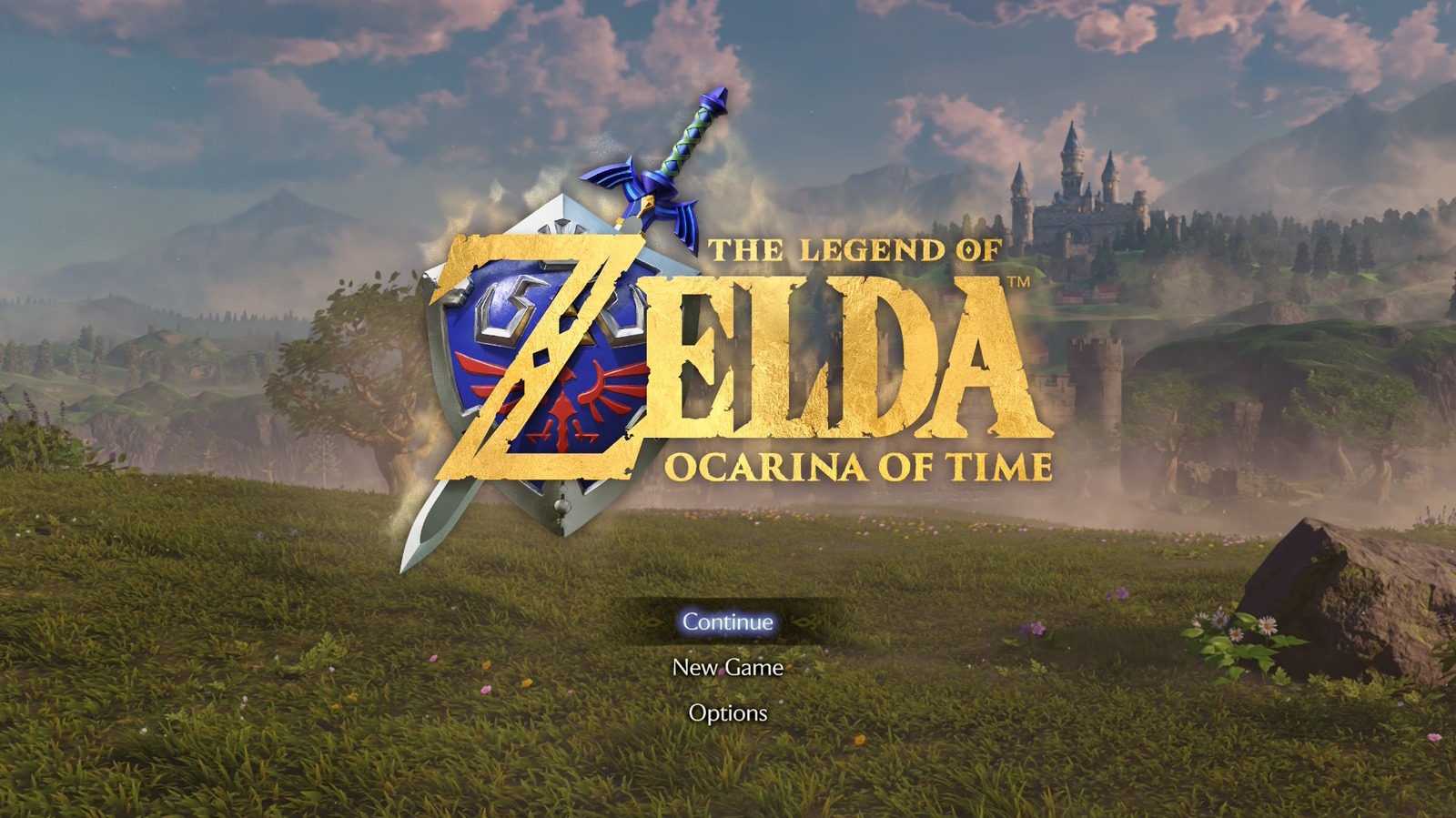
The moon sits high in the sky as Link trots across a grassy ridge on horseback while a gentle piano melody plays in the background. Then the camera shifts to the lush fields of Hyrule, just before the soulful whistle of a flute hits your ears and the game's title screen coalesces into view. After nearly 30 years The Legend of Zelda: Ocarina of Time is back, but it's not quite like you remember.
For those that played the original from 1998, or even the 3DS port from 2011, thinking about that intro is probably more than enough to send chills down your spine while you reminisce about one of the greatest video games ever made. And for those who haven't, that sequence foreshadows a classic tale of good and evil that also served as a turning point for a beloved franchise, making the jump from 2D and setting the template for a generation of 3D games to come.
For 2026, Ocarina's most obvious upgrade is its overhauled graphics, which replace the blocky polygons of the original with beautiful high-res models. A lot of times when developers update older titles, you end up with a game that looks how you remembered in your mind instead how it actually appeared at the time. But in this case, Nintendo has done even better.
In a recent interview, the game's art director Aya Shida said the goal was to rebuild Hyrule while retaining the feel of the original, adding extra touches from things like puppet shows or the feeling of practical film effects. I think the team nailed it, because even though it's still clearly a modern video game, Ocarina has a more nostalgic aesthetic that evokes movies like The Dark Crystal. Now I will admit if you single out specific features, some things may look a bit odd — like Young Link's gigantic eyes or the game's tendency to give everyone oversized schnozzes — but all together, it just kind of works. That said, I'm still not a huge fan of the way much of its water looks, which often adds a slimy cast to characters and creatures. But that's a really minor nitpick because as a whole, the game is gorgeous.
However, another more subtle impact of Ocarina's improved graphics are all the new battle animations and special effects. This includes elements like the particles that fly out when you slash enemies or the low-lying fog that lingers throughout various dungeons. And when you get the chance to upgrade Link's spin move, it feels like you've been granted a miniature hurricane. Compared to the original, all these little tweaks have a big impact on the overall atmosphere of the game. The Forest Temple is now just a little bit spookier while Death Mountain feels hotter and more treacherous than before. So even if you have loaded memories of the game from decades ago, the vibes are more profound this time around.
On the flipside, unlike reworks of other hall of fame games such as the Final Fantasy VII remakes, Nintendo hasn't messed with the Ocarina's story or gameplay. Now I won't be surprised if some people feel like the developers should have done more, but as the original title was such a trendsetter when it came to figuring out how to make 3D combat work, I'm kind of glad that the game's core mechanics are largely intact. (Remember, the N64 was the first mainstream console to feature a controller with an analog stick.) As I played this update, Ocarina began to feel more and more like a precursor to recent titles like Dark Souls and Elden Ring. I'm sure those games would have eventually gotten made in some fashion, but there's no doubt Ocarina was a major influence for a lot of today's modern RPGs. Sometimes, Ocarina does feel a bit simplistic. But the game's straightforward combat and puzzle solving are quite refreshing in a way, simultaneously serving as a welcome on-ramp to younger players, just like the original was to '90s kids.
Thankfully, Nintendo has changed the game's camera to be fully adjustable, which definitely helps during heated battles. There's also an updated quick item menu that is a lovely quality-of-life upgrade. Meanwhile, the new Threads of Time system helps newcomers, or people who have taken a break from the game, keep better track of the game's quests and objectives. Link can sprint now too (by holding down the A button after rolling), though for me, years of muscle memory still has me tumbling across Hyrule as if Link is an honorary Goron (which he kind of is). Some other subtle changes include welcome balance tweaks, like toning down how many rupees you can farm early on and fixing some terrain to prevent certain exploits and shortcuts. Even Link's fairy companion Navi is noticeably less talkative, which is a good thing, unless you have fond memories of someone yelling "Hey, listen" at you.
In the end, reviewing the new Ocarina of Time was more challenging than I thought it would be, mostly because I can't erase the feelings I have for one of the most formative games of my childhood. Heck, as a kid I taught myself to whistle partly so one day I could perform Epona's song and befriend any horses I might encounter in the future. (Spoiler: It didn't work.)
For me, this new take on The Legend of Zelda: Ocarina of Time is everything I expected it to be and more, thanks to subtle updates and a deft hand that preserved the feeling of the original. But for those who haven't played it previously, I still think it holds up incredibly well. Updated graphics make it more appealing to younger generations (my five-year-old is already a massive fan) and the story and gameplay feel as timeless as ever. In a way, I kind of envy anyone who hasn't experienced Link's first 3D adventure before. This Switch 2 version is a masterpiece reborn, and it's a treat for fresh eyes just as much as it is a tribute to the original.
Source: Read original article



Comments ()