


If you’ve ever wondered whether an AI feature on your phone is doing anything useful, Ben Khalesi has probably asked the same question. He has covered AI and Android for Android Police since 2023, with Pixel, Galaxy, Google’s apps, and the rest of the Android ecosystem never far behind. Ben is a lifelong geek who trained as an AI engineer and earned a bachelor’s in IT, so when the industry announces something new, he’s the one who wants to know how everything works behind the scene and what can be trusted.
I have a radio on my Samsung Galaxy S26+ that I forget about most days. But when something like a SmartTag goes missing and it walks me right to it, I remember why it’s there.
Unfortunately, if the latest leak holds up, the Galaxy S27+ won’t have it. Samsung put Ultra-Wideband hardware in the Galaxy S21+ in 2021.
For six years, the Plus model has been the cheapest way to get precise item tracking and a few other handy tricks.
According to Chinese MIIT certification filings shared by tipster Abhishek Yadav, the S27+ won’t have a UWB radio.
Samsung seems to be keeping UWB only for the new Galaxy S27 Pro and Galaxy S27 Ultra. The base Galaxy S models never had UWB, so the S26 doesn’t either.
Pulling it from the Plus, however, looks like a choice Samsung made to spread its lineup further apart.
SmartTag finding is where you’ll feel it first
Arrows is better than a beeping guessing game
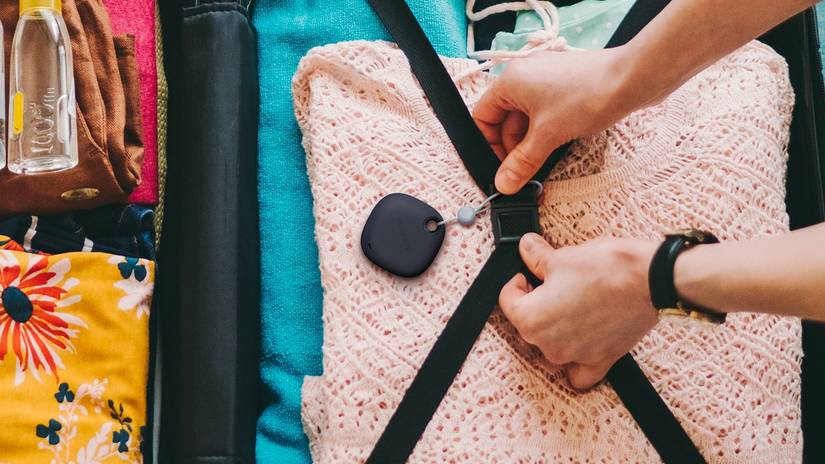
Samsung built the Galaxy SmartTag2 around a UWB chip to power Compass View.
Tap Search Nearby in the SmartThings Find app, and the S26+ pulls up a directional compass with an augmented-reality view.
Big arrows point at the tracker while the distance ticks down in 0.1-meter steps. This makes finding your lost wallet under a car seat a quick job.
Without UWB, a SmartTag2 loses Compass View, and tracking falls back on Bluetooth Low Energy. The phone has to guess how close you are based on signal strength.
From there, you’re wandering around listening for the tag to ring. The new SmartTag3 adds a Bluetooth fallback for directions, which I’ll get to below, but it still hands off to UWB up close. Most S27+ owners will probably notice this.
Phone car keys get a lot clunkier without UWB
NFC works, but you’ll be tapping door handles
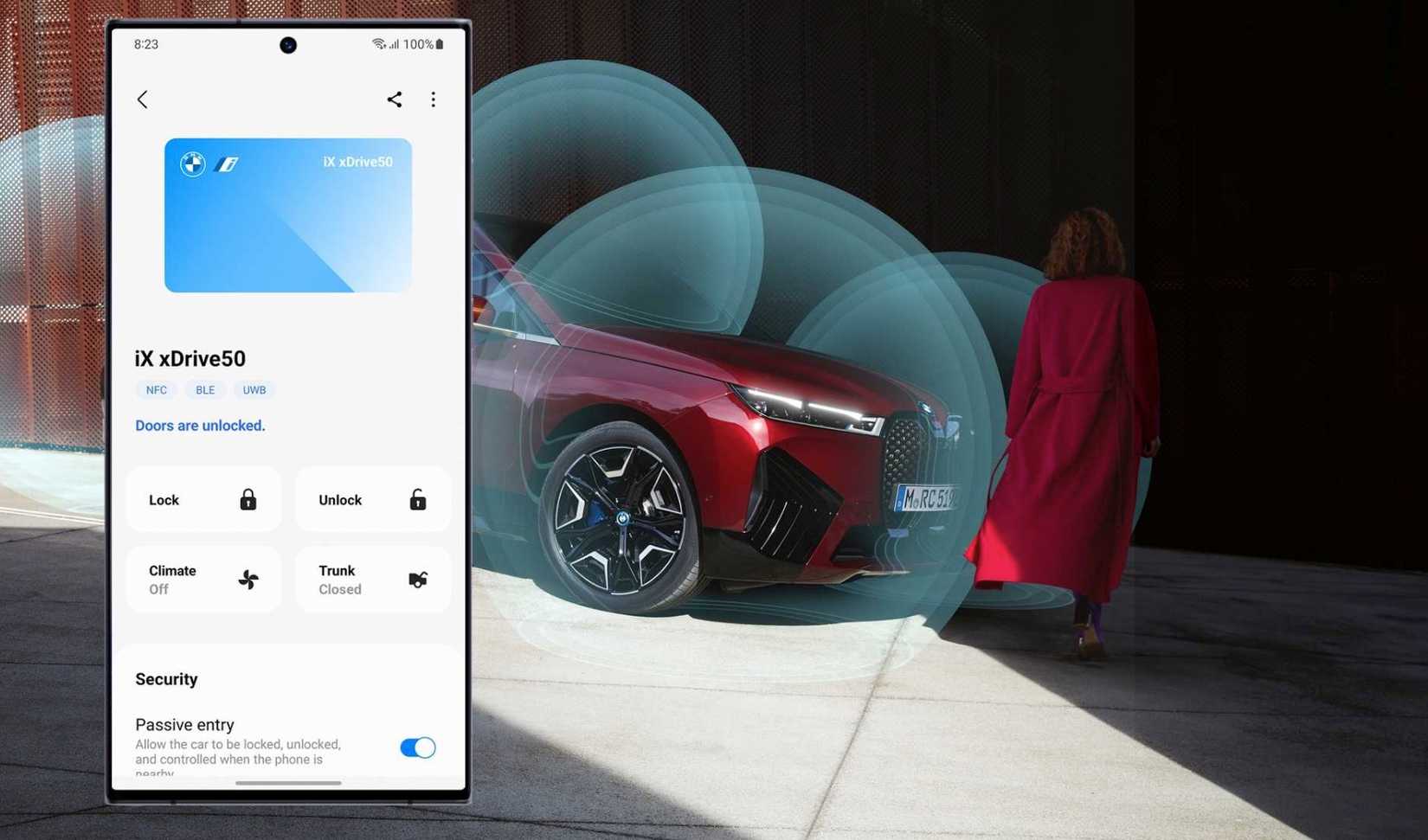
Samsung Wallet’s Digital Key lets your phone stand in for a physical key in Volvo, Polestar, Genesis, and Cadillac cars.
The Car Connectivity Consortium’s standard relies on UWB for hands-free entry because it’s harder to fool with a relay attack.
UWB measures the exact time of flight for the radio signal. The car knows precisely how close the driver is, so a thief can’t trick it with a signal relayed from inside your house.
With the S26+ in your pocket, you get secure passive entry. Walk up to a supported car, and the doors unlock automatically.
Without UWB, the car key falls back to NFC or Bluetooth, depending on the car, and NFC requires the phone to be right up against the reader, within a few centimeters.
That means pulling the phone out and tapping it against the door handle to get in. That’s fine as a backup.
If your car supports Digital Key, this is the biggest thing the S27+ takes away, and I’d probably feel it every day, because it’s slower and more annoying than the key fob it was supposed to replace.
If your car doesn’t, you won’t care.
Samsung Wallet also recently added the Digital Home Key, built on the Aliro smart lock standard, which lets UWB phones unlock compatible front doors hands-free.
Big lockmakers like Schlage and Yale are backing Aliro, so hands-free door unlocks should spread. On a phone without UWB, again you’re back to NFC taps at the door.
Small losses that still add up

Quick Share uses UWB through a Point to Share feature on supported Galaxy devices.
Trying to send a big video in a crowded room? Point the S26+ at a colleague’s UWB phone, and their device jumps to the top of the sharing menu.
Bluetooth and Wi-Fi still handle the actual transfer. UWB only does the sorting.
Losing Point to Share is a minor problem. It’s still one more bit of premium polish the S27+ won’t have.
Bluetooth 6.0 can’t fully replace UWB
Channel Sounding helps, but it has limits

There is a technical argument for Samsung’s move. The Galaxy S26+ supports Bluetooth 6.0, which includes a feature called Channel Sounding, and the S27+ should keep it.
Older Bluetooth guesses distance from signal strength. Channel Sounding measures the radio wave’s physical phase to calculate distance more accurately.
Samsung uses it in the new SmartTag3 for directional guidance, which sounds like a UWB replacement. I’m not so sure.
UWB uses a wide 500MHz channel that easily sorts out signal reflections in crowded areas, while Bluetooth 6.0 is still stuck on the 2.4GHz band.
Indoors, around furniture and appliances, Bluetooth has a harder time telling the signal from its echoes.
Channel Sounding runs on the Bluetooth chip the phone already has, while a dedicated UWB chip likely adds only a few dollars to the bill of materials.
I’d hand Samsung those few dollars myself. Apple has put UWB in every flagship iPhone since 2019, and Samsung still hasn’t brought it to the base Galaxy S. Now it’s taking it away from the Plus.
Samsung wants you to buy the Pro
Samsung reportedly plans four 2027 flagships, adding a new Galaxy S27 Probetween the Plus and the Ultra.
Leaked pricing puts the S27+ at a starting price of $1,100 and the S27 Pro at $1.300.
To justify that $200 jump, Samsung has to make the Plus and Pro feel more different. The Pro reportedly gets a 200MP main camera, faster LPDDR6 memory, and keeps UWB.
The Plus gets standard cameras and Bluetooth-only location tracking.
Dropping a roughly $2 part from a $1,099 phone strikes me as cynical, and I suspect that is the point. Samsung wants the S27+ to feel compromised enough that people pay more for the Pro.
