

After October 7 strained Israel’s mental health services, Clear Sky joined Google.org and other partners to recognize digital tools supporting therapists, including a safety-planning app used at Hadassah to help teenagers at risk of suicide
In collaboration with Clear Sky
The mental health crisis that followed the October 7 attacks has exposed a major challenge for Israel: How can a healthcare system meet soaring demand for psychological treatment when the number of people seeking help far exceeds the available resources? One Israeli organization believes technology can help bridge that gap, not by replacing therapists, but by giving professionals and patients additional tools to cope with trauma and emotional distress.
Clear Sky, a nonprofit established in response to the October 7 attacks, marked a significant milestone this week with a technological innovation awards ceremony at Google’s offices in Tel Aviv. The event highlighted initiatives designed to improve mental health care, including a digital tool intended to support teenagers at risk of suicide.
The Technological Innovation Award for Mental Resilience and Mental Health ceremony at Google’s Tel Aviv offices
“We established Clear Sky right after October 7, with the idea and vision of bringing technology into the mental health field and trying to narrow the gap between supply and demand through the Israeli innovation we’ve trusted for so many years,” said Adi Yoffe, a business futurist and co-founder of the organization.
According to Yoffe, the goal is to harness Israel’s technological capabilities to address the country’s growing emotional and psychological needs.
One of the main obstacles the organization’s founders identified was the relatively conservative approach that has characterized medicine and mental health treatment for decades.
“Mental health is one of the most conservative fields in medicine,” said Prof. Ehud Davidson, chairman of Clear Sky and former CEO of Clalit Health Services, Israel’s largest health maintenance organization, who has also headed hospitals.
“We saw a field of medicine with almost no technologies capable of advancing or accelerating treatment, or allowing us to move beyond the traditional one-on-one model toward an entirely different approach.”
The organization stresses that technology should not come at the expense of the human relationship between therapists and patients. Instead, it aims to strengthen that relationship by making practical, accessible tools available to more people.
 Yael Aberman, CEO of Clear SkyPhoto: Shmulik Davidpur
“Technology and therapy can work wonderfully together if technology is introduced in the right places,” said Clear Sky CEO Yael Aberman. “The human being is always part of the process. We’re not removing people or the human connection. Quite the opposite. We want to empower people and give them tools.”
The annual innovation awards ceremony brought together organizations involved in mental health care and technology, including the Defense Ministry, pharmaceutical company Teva and its Caring for the Mind initiative, Joint Israel and Google.
The event showcased technological projects aimed at strengthening mental resilience and improving access to mental health support.
Among the winners was Dr. Amit Shalev, a psychiatrist and head of child and adolescent psychiatry at Hadassah Medical Center in Jerusalem, who presented a digital tool already being used at the hospital.
“The app we submitted to the competition is a safety-planning program designed for teenagers with suicidal tendencies,” Shalev explained.
“The app was developed in the United States and translated into Hebrew by our team. It helps identify triggers, cope with moments of intense impulses, regulate emotions and deal with distress. It also addresses the question: Who can I turn to when things get difficult?”
The application is intended to provide structured support during periods of emotional distress. Its recognition at the awards reflects the effort to incorporate digital tools into existing mental health services, rather than rely exclusively on traditional treatment methods.
“It’s encouraging to have an organization that supports these processes, provides encouragement and accompanies them,” Shalev said.
For Yoffe, the awards ceremony represented an opportunity to recognize organizations already bringing technology into mental health care. “We want to celebrate organizations in Israel that are implementing technologies in mental health and helping large numbers of people through technological innovation,” she said.
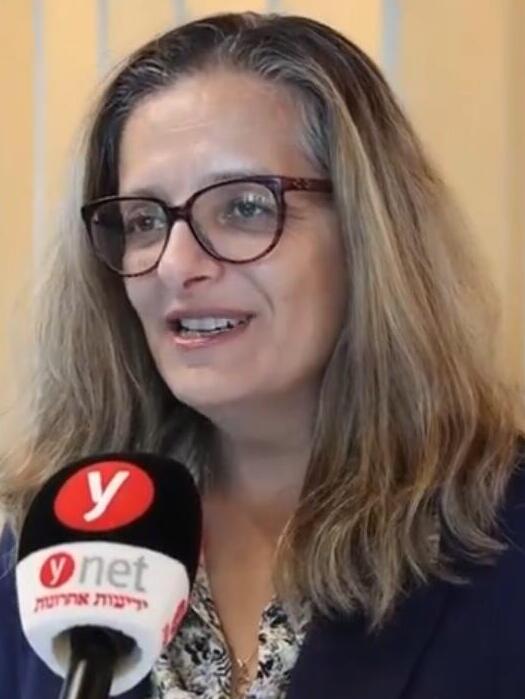 Noa Elefant-LofflerPhoto: Shmulik Davidpur
Google’s involvement is a central part of Clear Sky’s effort to bring together the technology sector and mental health professionals. The awards initiative was supported by Google.org, the company’s philanthropic arm, and the ceremony took place at Google’s Tel Aviv offices.
Noa Elefant-Loffler, Google’s director of public policy and government affairs in Israel, described the collaboration as an opportunity to address a pressing social challenge. “We see technology as an important tool for solving social problems, certainly in mental health, where there is so much need and so few solutions,” she said.
“The collaboration between Google and Clear Sky gives us an opportunity to bring the power of technology together with entrepreneurs and people working on the ground to create positive change. From our perspective, this is an excellent model, and it’s important that it continues.”
The partnership reflects the organization’s broader ambition to connect Israeli technological expertise with the people and institutions providing mental health care. Looking ahead, Aberman believes Israel’s experience of turning urgent national challenges into technological innovation could offer a model for the mental health sector.
“When I look at Israel today, I see that we’re leaders in technology, agriculture and cybersecurity because we faced existential needs,” she said. “The same is true today of our need in mental health. We have to find ways to harness technology to serve that need.”
In collaboration with Clear Sky
