

- WhatsApp is testing a new disappearing messages feature
- It may delete texts after they’ve been read, not just after a set timer
- The feature is being tested on both iOS and Android
If you want to be able to send a WhatsApp message to someone on your iPhone and have it disappear after they’ve read it, you’re in luck, as it looks like WhatsApp is currently testing this feature with a view to potentially launching it in the future.
That’s according to a new leak from WABetaInfo, at least. On its blog, WABetaInfo claims that WhatsApp is working on a new feature that will delete messages on iOS once they have been read. That could be a good way to protect your privacy if you don’t want certain messages to stick around.
Disappearing messages already exist in WhatsApp, but they’re a lot more limited in their current iteration. Right now, you can set messages to vanish after a specified period of time has passed: 24 hours, seven days or 90 days. However, this is something of a “brute force” option, as it doesn’t consider whether the texts have actually been read before they get deleted.
The new update changes that. It adds an “after reading” option in the message timer settings that will let you tell WhatsApp to erase your texts once the recipient has seen them, not just once a predefined timer expires. That gives you more flexibility and ensures the text receiver actually has a chance to read what you sent before it’s gone.
Gone in 60 seconds
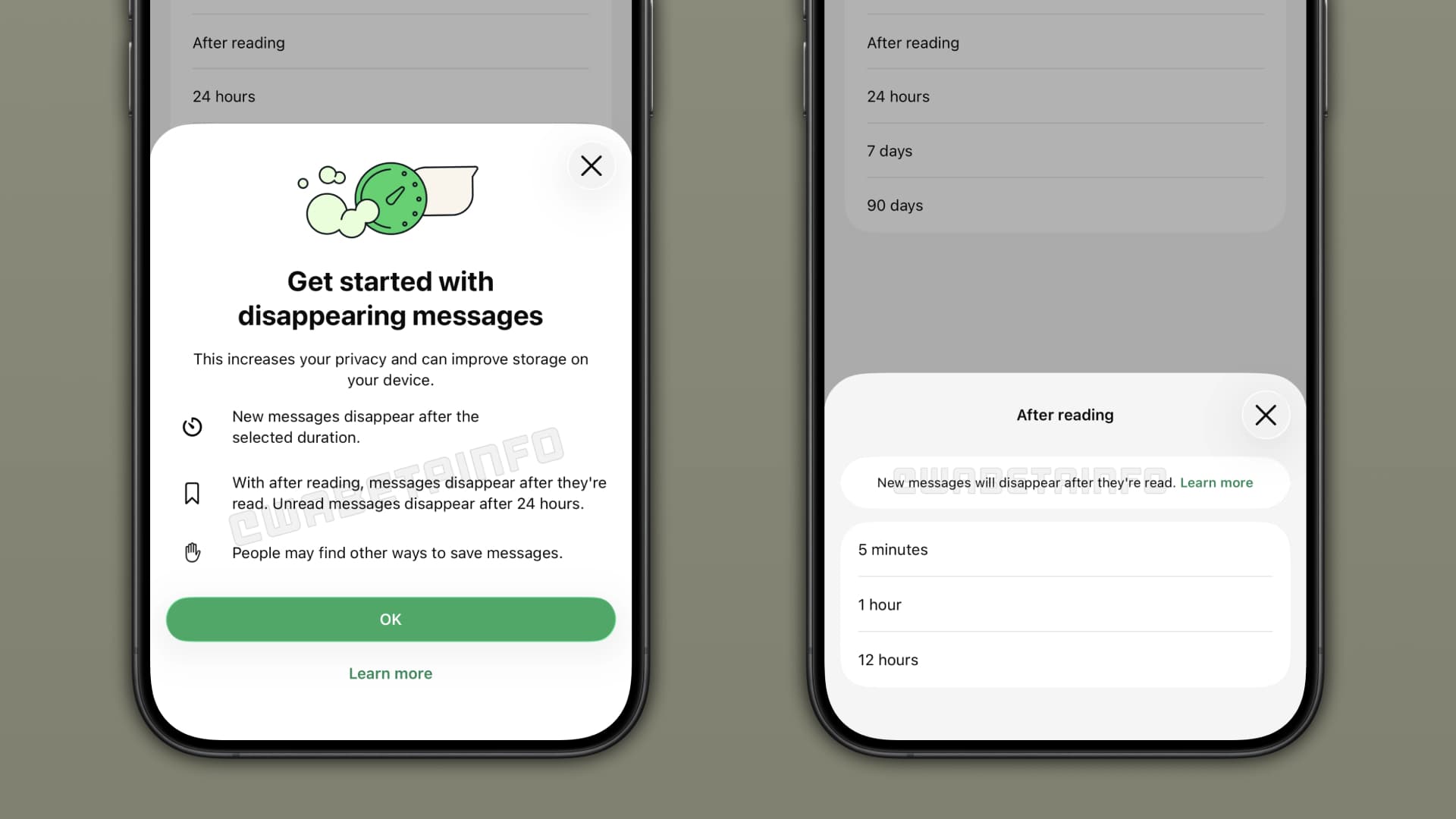
WABetaInfo describes this change as bringing “a new layer of privacy to disappearing messages.” And while the requirement is now for users to have read the message you’ve sent them, you can still control how long WhatsApp waits after that before purging the texts, with options including five minutes, one hour or 12 hours. Messages that remain unread will disappear after 24 hours regardless of the setting you choose, though.
Interestingly, the timer for the sender and recipient do not have to be in sync with each other. WABetaInfo says that if you set the timer to five minutes, for example, the message will be removed from your own device after that period elapses. But if the person on the other end doesn’t open it for several hours, it’ll still be available on their phone. As soon as they open it, the five-minute timer begins.
WhatsApp began testing this expanded timer for disappearing messages in April 2026, but at that time it was limited to Android devices. Now, it’s expanding to iOS as well. The fact that it’s being tested on both major operating systems implies that it could be close to release.
That said, there’s no word on when this feature might become available. WABetaInfo doesn’t have any information on releasing timing and there’s no official word from WhatsApp, so we’ll have to wait and see when it arrives.
Still, this feature could be a worthwhile addition, whether you already use disappearing messages and want more control or have never tried them but are curious about how they can protect your privacy. Stay tuned for more information on an official launch date.

Follow TechRadar on Google News and add us as a preferred source to get our expert news, reviews, and opinion in your feeds.
