

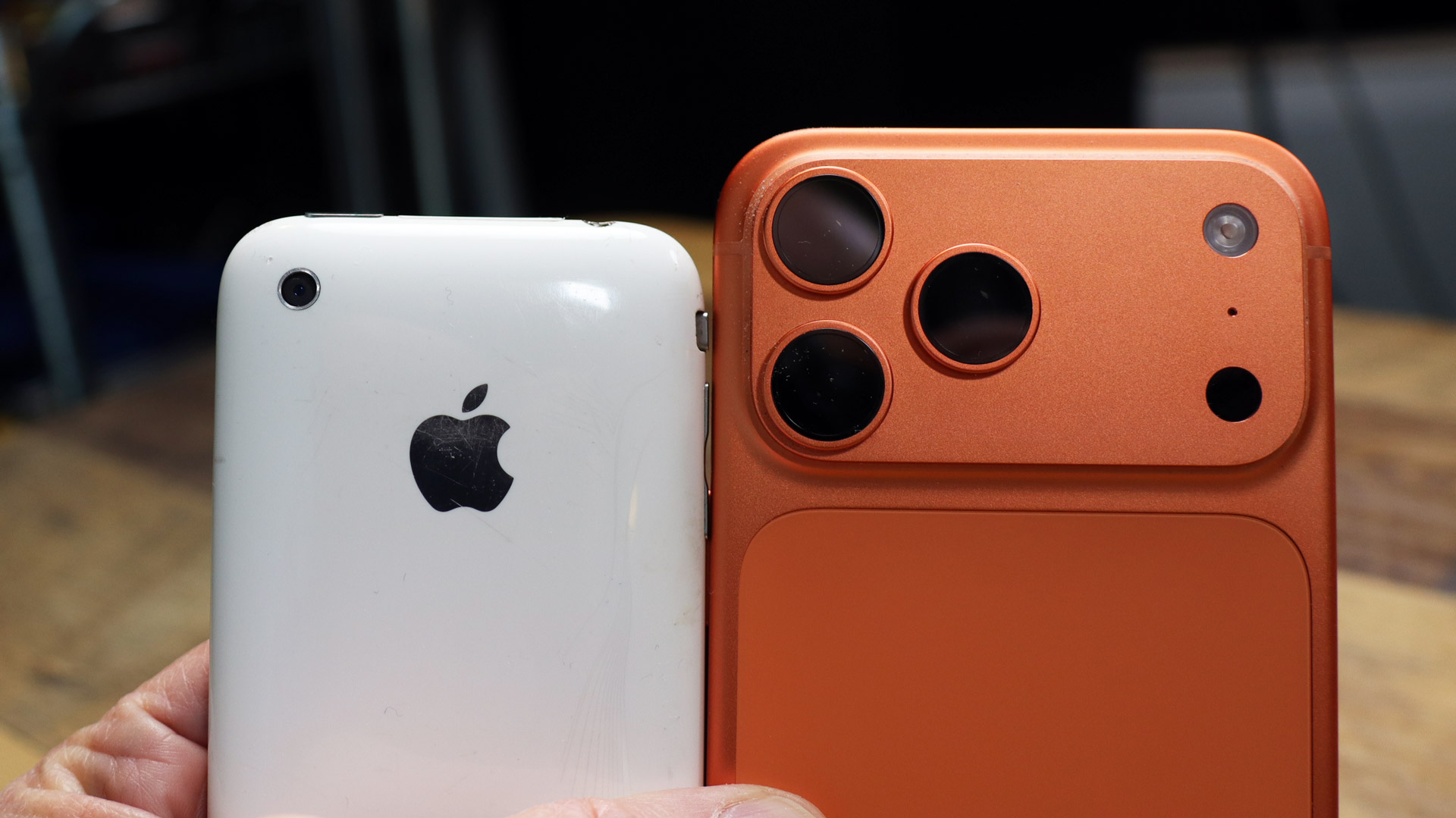
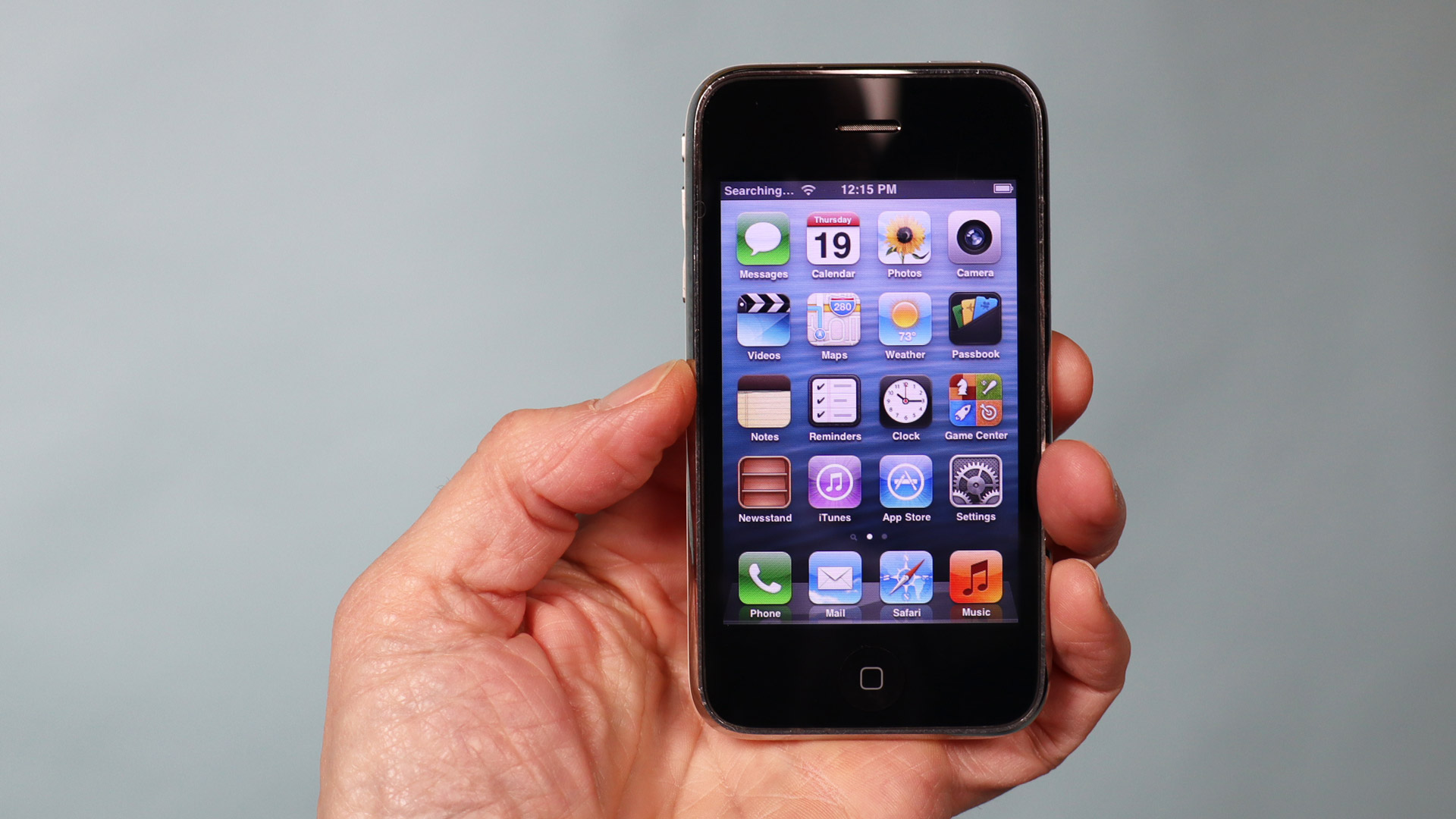
There it was, nestled among our office’s pile of aging smartphones, a white iPhone 3GS. I felt like I’d just stumbled on a vintage Furby. Cradling the tiny, 4.5-in phone in my hand, I wondered if it still worked.
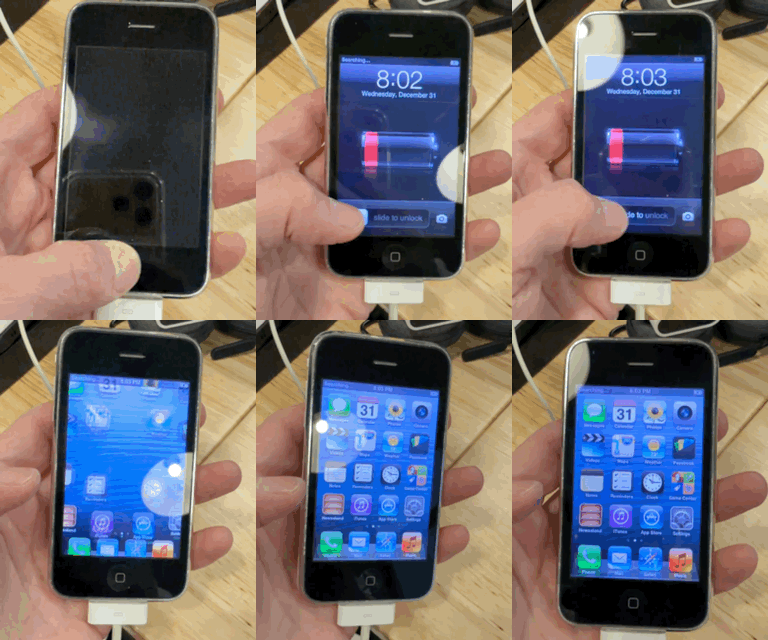
I had reason to doubt. After all, the iPhone 3GS shipped 16 years ago, and this one had been sitting in a drawer for I don’t know how long. The only way to know was to charge it up. Fortunately, I’m a bit of a hoarder, and I still have quite a few 30-pin charging cables lying around.
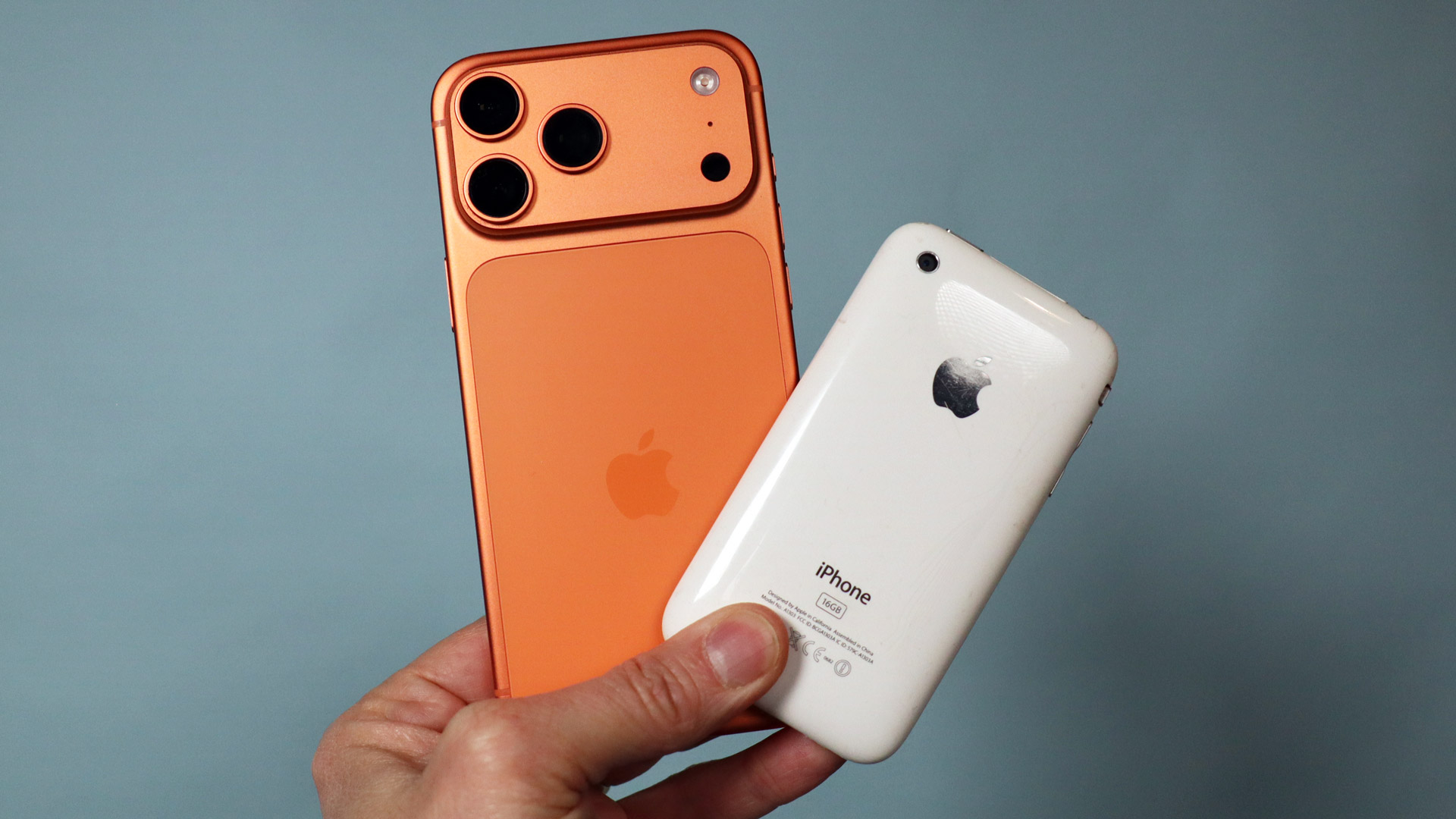
Now that I had the iPhone 3GS fully charged, I wondered what to do with it. I couldn’t put it on a cell network since 3G support ended around 2022. Wi-Fi worked, however, so I opened the settings and put the phone on my local office network.
I should say that every operation with the phone was a trial. Each keystroke took a beat to appear, but it worked well enough for my purposes.
What were those purposes? A camera comparison, of course, and not with just any shooter. I planned to pit one of the earliest iPhones against the apex handset, the iPhone 17 Pro Max.
Since the iPhone 3GS has just one camera, and the iPhone 17 Pro Max has four, I decided to only compare the 3GS lens with the 17 Pro Max’s main camera.
From a specs point of view, here’s how they compare:
Swipe to scroll horizontally
|
iPhone 3GS |
iPhone 17 Pro Max |
|
3-megapixel still camera |
48MP Fusion Main: 24 mm, ƒ/1.78 aperture, sensor‑shift optical image stabilization, Focus Pixels |
Right. There is no comparison. This table doesn’t even mention the significant differences in the silicon backing these photographic capabilities.
The iPhone 17 Pro Max has the A19 Pro and a powerful image pipeline that includes Apple’s “Photonic Engine,” computational photography that shoots multiple images and uses, among other things, machine learning, to create a final photo.
The iPhone 3GS had a little 600MHz Samsung chip that didn’t really pitch in much on the image capture front.
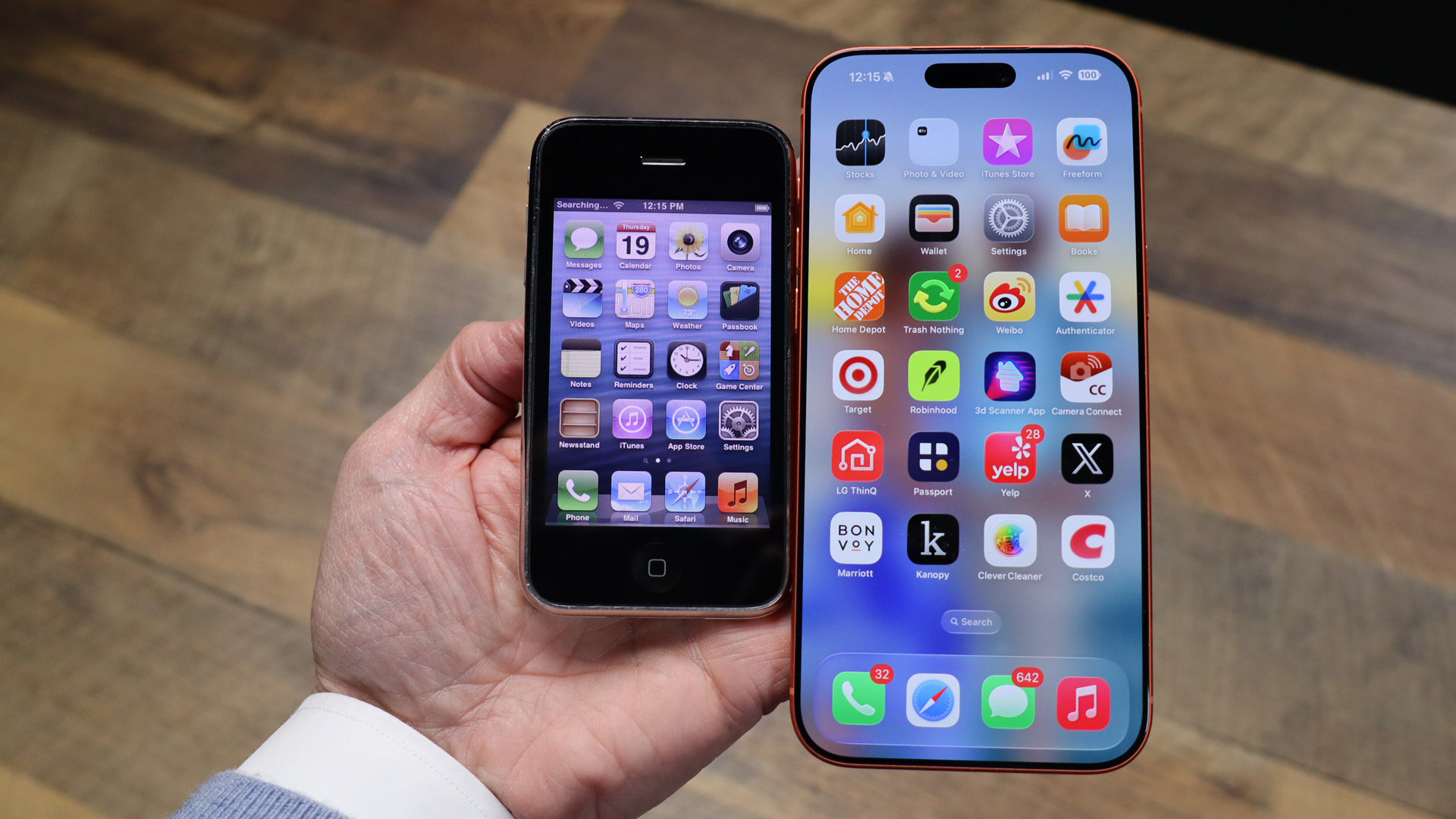
In other words, I’m under no illusion that I can create a direct comparison of photographic capabilities. What I could do, though, is illustrate just how far we’ve come in a relatively short 16 years. Traditional photography hasn’t made leaps like this in such a short time. Over a similar timeframe of film photography, you saw incremental upgrades in lenses and controls, but the art of image capture remained aside from color photography, relatively static for decades.
Let the games begin
I started by opening the camera app on the iPhone 3GS and…nothing. Well, not exactly nothing. I got to stare for a bit at the Camera app’s aperture-like shutter screen that usually opens to reveal the viewfinder.
At first, I thought the phone was broken, and I was ready to scrap the experiment when the virtual aperture finally spun open, and I could see through the tiny camera.
It was time to start taking photos, but…
I discovered another frustrating and also understandable limitation. Even though the iPhone 3GS worked and let me take photos, the fully charged battery would get exhausted after just a few shots – no warning, just a dead screen. What I was experiencing was a battery whose fully charged capacity had dropped to a few minutes. Getting a replacement battery was out of the question, so I had to make do.
Over the next few days, I did my best to, whenever I took a photo with the iPhone 3GS, take a matching shot with the iPhone 17 Pro Max’s main camera. In an effort to give the iPhone 3GS a fighting chance, I never tapped on either screen to adjust the exposure or focus, just point and shoot.
It’s hard to compare the image capture resolutions of these two phones; the iPhone 17 Pro Max is taking up to 48MP but defaulting to 24MP images with a resolution of 5712×4248. Compare this to the iPhone 3GS’s 2048×1536.
All images on the 17Pro Max were shot in a 16:9 aspect ratio. The iPhone 3GS only offers 4:3. No editing of any kind was done before posting the images below.
Side note: Carrying around the white iPhone 3GS was a joy. It not only slipped right into my pocket, but it also slid effortlessly into the tiny coin pocket nestled inside the larger pants pocket. I often forgot I was carrying it.
iPhone 17 Pro Max main camera vs. iPhone 3GS camera
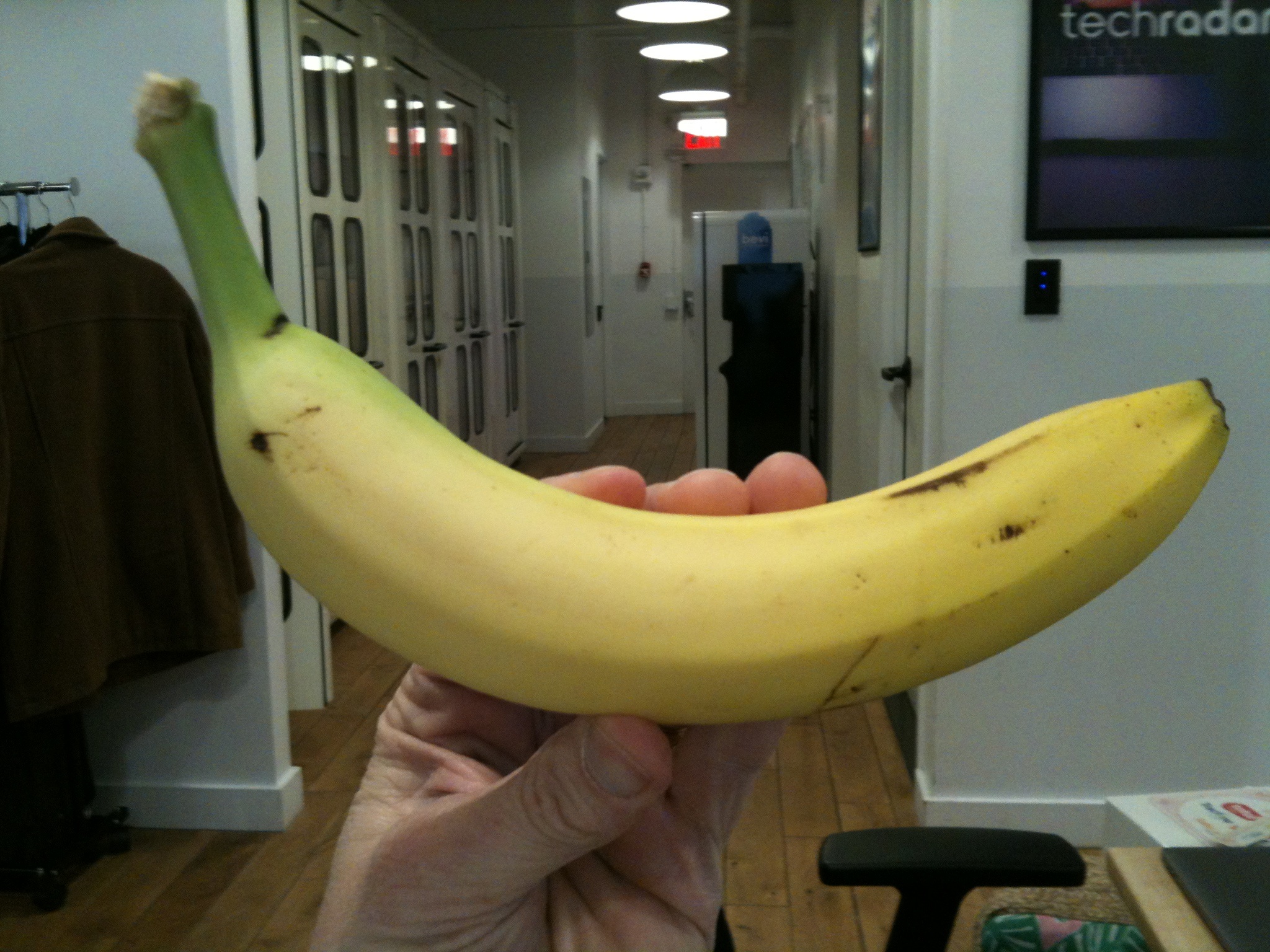
This banana photo is a perfect example of the many image quality differences between the two phones. The colors on the iPhone 3GS image are, on the whole, flat. It’s a relatively low-light situation that proves challenging for the 3GS (note the significant grain). Meanwhile, the banana in the iPhone 17 Pro Max essentially jumps out of the frame.
As you might imagine, there’s virtually no comparison on the portrait front. The iPhone 17 Pro Max main camera offers a wider-angle lens, automatically pulling in more of the scene without taking anything away from our subject, Tom’s Guide’s Kate Kozuch.
Again, the low-light situation gives the entire 3GS image a gray overcast and throws too much of her face into shadow. There’s a wealth of colors and warmth in the iPhone 17 Pro Max image. The skin tone is virtually perfect. While you can count individual hairs in the 17 Pro Max image, those details are largely lost in the low-resolution iPhone 3GS portrait.

It’s hard to believe these two train platform images were shot at the same time of day, but they were, and just seconds apart. The iPhone 17 Pro Max is inarguably the better image, but there’s a certain noirish romanticism in the iPhone 3GS shot. I know it’s almost all shades of gray-blue, but I kind of like it.

The iPhone 3GS’ focus on the headlights gives this image an ethereal feel, but it’s also, overall, a very dark photo even though it was captured during an overcast afternoon. The iPhone 17 Pro Max gives us a wider field of view and a far more cohesive photo.

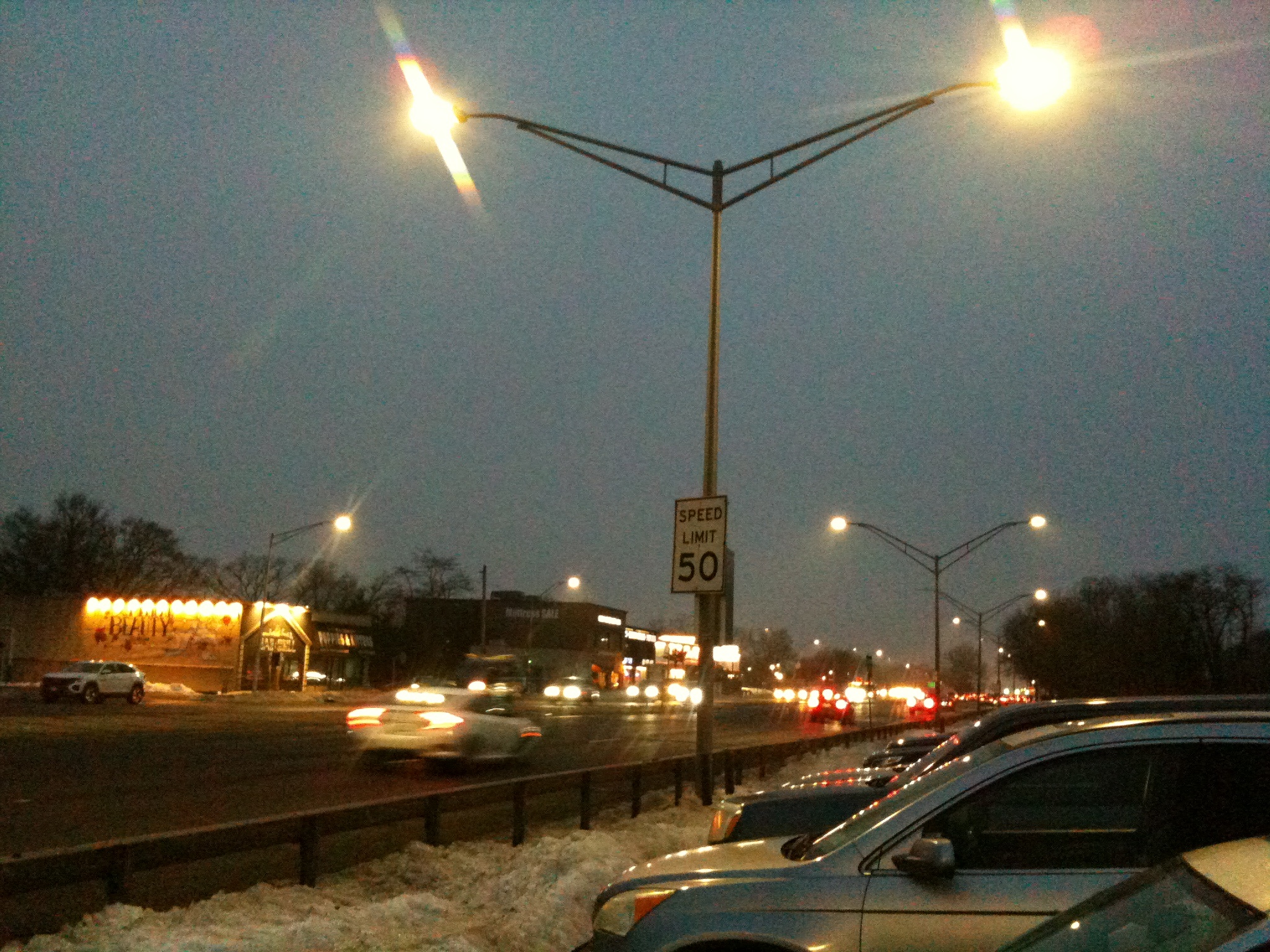
This is the only true nighttime photo of the series. The iPhone 3GS turned the sky green, and the cars are a blurry mess. The iPhone 17 Pro Max’s camera is almost fast enough to freeze the cars. The sky is unnaturally bright, but, of course, the 17 Pro Max gets major points for clarity and detail.
Look, the iPhone 3GS wins points for the moodiness, but the iPhone 17 Pro Max is simply better at handling challenging exposure situations. A foggy day like this means a way-too-bright wash of gray sky that, for the 3GS, throws the foreground into darkness. Apple’s modern computational photography is expertly assessing the entire scene and applying multi-point exposure for a more visually accurate image.
One other thing worth noting: the iPhone 17 Pro Max camera app includes a levelling tool that helped me make sure my images were always level. Obviously, the 3GS has no such tool, which is why the Empire State Building leans slightly to the right.

It’s hard to believe we ever shared photos from the iPhone 3GS (yes, Twitter was installed in the phone). The iPhone 3GS produced a particularly unappetizing food photo with flat, muddy colors and a distinct lack of depth for each pastry. The iPhone 17 Pro Max makes it all look so real and yummy.

Final thoughts
By the way, after I took these photos on the 3GS, I had to figure out how to get them from the phone to my laptop, and this story. I tried plugging the phone into my MacBook Air, but even though the system recognized the phone, it could not mount it as a drive.
I found, though, that the Safari browser worked well enough to let me log into Gmail. So, yes, I mailed the images to myself.
Not only do these photos illustrate the vast differences between camera, image sensor, and photo-processing capabilities, but also all that we now take for granted on our flagship smartphones. These cameras now do so much to stabilize images, fix exposure, ensure color accuracy, and maintain focus. They also give us previously unimaginable image clarity. I chose to shoot at just 24MP on the iPhone 17 Pro Max, but could have selected 48MP and even shot in raw for exquisite detail and complete control.
Sure, the iPhone 3GS loses this round, but nothing can compare to its size, portablilty or the nostalgia of these images. They really do speak to a simpler time. One that some generations are now striving for as they pick up older point and shoots, revive film cameras, and seek a pre-filter, and grittier look and feel for their photos.
I guess they could try to find their own iPhone 3GS, but they’ll need new batteries and a whole lot of patience.
