

TechRadar Verdict
The Motorola Razr Fold 2026 is a solid start for Motorola’s flagship fold ambitions. It’s thin enough, light enough, and fast enough. Plus, it’s infused with enough AI to compete with the big guns. We have some quibbles with the design, like that massive camera array plateau, but the 5G folding phone/tablet gets extra credit for bleeding-edge battery technology and the support of a lovely digital pen in a very silly case.
Pros
- +
Relatively light and thin
- +
Decent camera array
- +
Strong performance
- +
Silicon-carbon battery
- +
Pen support
Cons
- –
Camera plateau is huge
- –
Waterfall cover screen is an acquired taste
- –
Over-processed images
Why you can trust TechRadar We spend hours testing every product or service we review, so you can be sure you’re buying the best. Find out more about how we test.
Motorola Razr Fold: Two-minute review
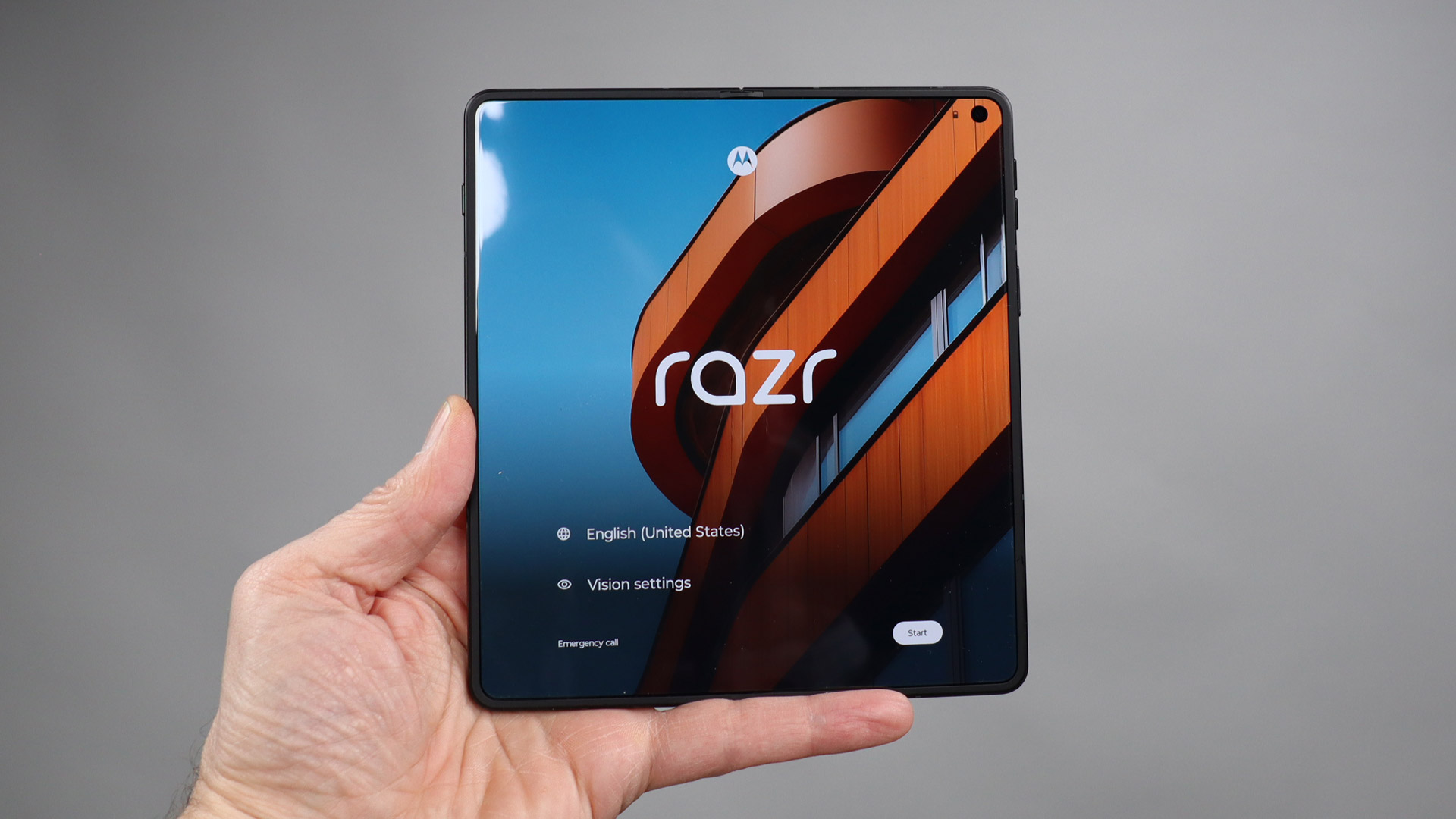
It offers a lot of high-megapixel cameras, even on the main screen and cover screen selfie cameras, but the photo quality, while good, is not as sharp and true as you would expect for a smartphone hovering near the two-grand range.
It supports a Bluetooth digital pen — something the Galaxy Z Fold 7 can no longer claim — but stores it in a cigar-sized charging case that might draw unwanted attention in your pocket.
Even the colors, which are lovely, get a left turn thanks to one name in particular: Pantone Blackened Blue.
All that said, I like this foldable. It has enough power, versatility, and intelligence (Gemini and Moto AI) to satisfy the most discerning foldable fan. There’s even some ground-breaking technology on board in the form of silicon-carbon batteries — a first for one of the major smartphone brands in the US. The new chemistry enables more power and longer battery life in less space. It’s probably why I got at least two days of battery life per charge.
All in all, this is an impressive first full-foldable try for Motorola and certainly makes the Razr foldable series one to watch.
Motorola Razr Fold review: Price & availability
- Starts at $1,899.99 / £1,799.99 (AU$ not yet announced) for 512GB of storage and 16GB RAM
- Available in Pantone Blackened Blue and Pantone Lily White
The Motorola Razr Fold was unveiled on April 28 alongside a range of Razr Flip foldables.
While not cheap by any means, the Motorola Razr Fold 2026 does, at $$1,899.99 / £1,799.99, undercut the Samsung Galaxy Z Fold 7 by about $100 / £100. It ships in one configuration: 516GB of storage with 16G of RAM. What makes it an even greater value, though, is the pre-order bundle that adds the very useful Moto Pen Ultra, a writing, drawing, and annotation tool that significantly increases the smartphone’s utility. The Pen will cost $99.99 / £99.99 as an accessory.
Pre-orders start on May 14, and the phone ships on June 21. There are two color options: Pantone Blackened Blue and Pantone Lily White. I do wish someone had thought a little harder about that first color name. At least it’s quite attractive in person.
Swipe to scroll horizontally
|
Storage |
US Price |
UK Price |
AU Price |
|---|---|---|---|
|
512GB |
$1,899.99 |
£1,799.99 |
NA |
- Value score: 4 / 5
Motorola Razr Fold review: Specs
Swipe to scroll horizontally
|
Dimensions: |
Open: 160.5 x 144.46 x 4.55mm |
|
Weight: |
243g |
|
Inner Display: |
8.1-inch AMOLED |
|
Outer Display: |
6.6-inch AMOLED |
|
Chipset: |
Qualcomm Sanpdragon 8 Gen 5 |
|
RAM: |
16GB |
|
Storage: |
512GB |
|
OS: |
Android 16 |
|
Main cameras |
50MP wide; 50MP ultra wide; 50MP 3X telephoto zoom |
|
Selfie camera: |
20MP |
|
Internal selfie camera |
32MP |
|
Battery: |
6,000 mAh |
|
Charging: |
80W wired; Qi wireless |
|
Colors: |
Blackened Blue, Lily White |
Motorola Razr Fold review: Design
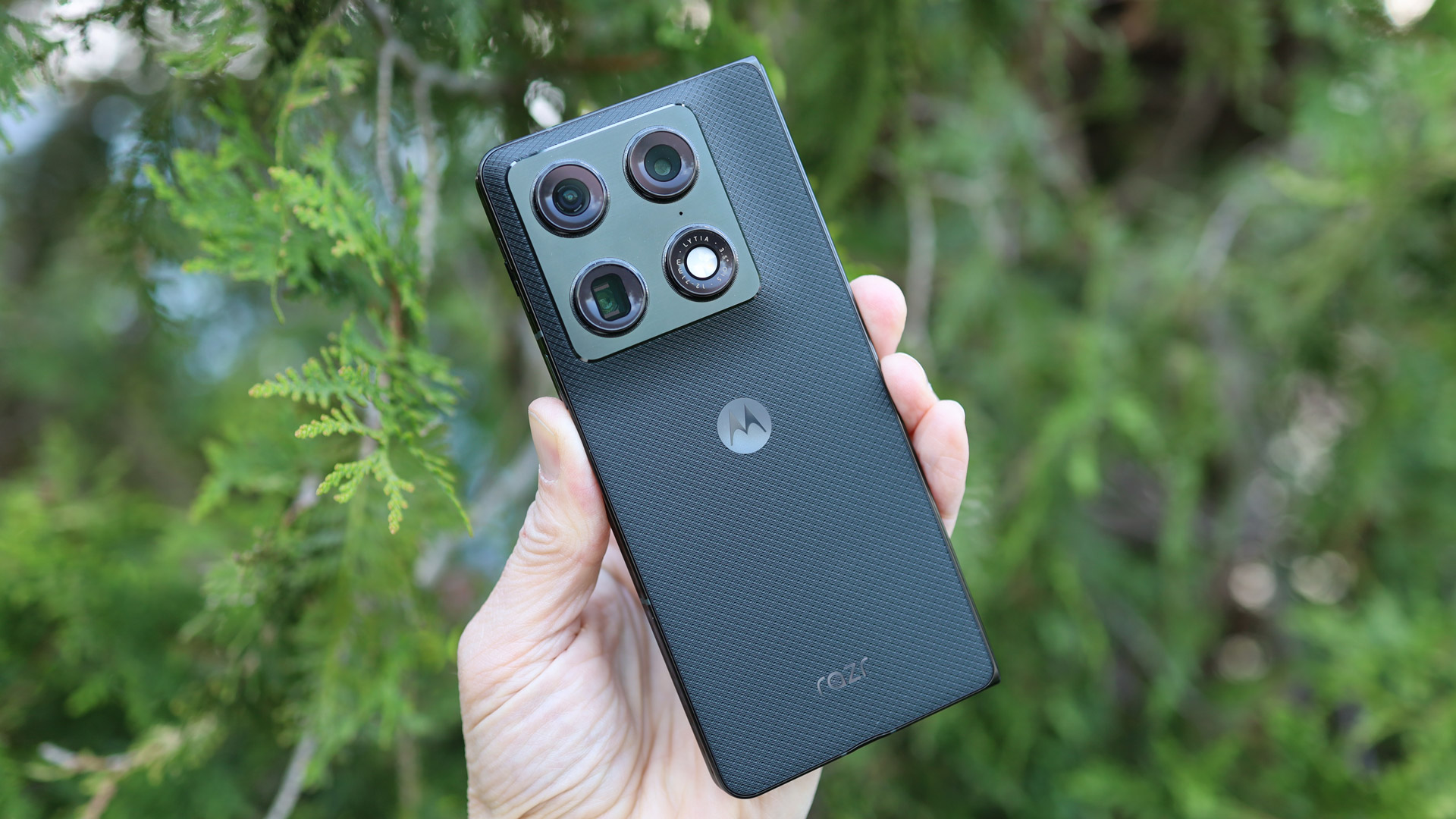
- Thin and relatively light
- The camera plateau is huge
- The etched back feels good and erases all concerns about it slipping from your hand
Out in the wild, the Motorola Razr Fold 2026 is the flexible phone most likely to draw quizzical stares and commentary. They look sideways at the camera bump, but are drawn to the otherwise elegant body. “Do you like it?” they ask with some concern.
I can tell that they, like me, are not entirely sure. The phone telegraphs “thin and light,” but when you hold it, it seems a bit more substantial. Even the numbers don’t tell the full story.
Folded, the Razr Fold is 160.5 x 76.6 x 9.89mm. That’s slightly larger and thicker than the Galaxy Z Fold 7. The unfolded numbers are similarly upscaled a bit. But none of it accounts for the big, tall, and square camera bump. If you lay the phone down on the camera side, it tips up at a considerable angle. That camera array also accounts for the weight, which at 243g is 28 grams heavier than the Galaxy Z Fold 7.
I know, it might seem unfair to constantly compare the Motorola Razr Fold 2026 to the Samsung Galaxy Z Fold 7, but for me, the latter represents the pinnacle of folding phone design. It’s not perfect (I hated losing pen compatibility), but the sum of its parts adds up to the best foldable on the market. It’s the benchmark Motorola must meet or beat to play in this arguably small market space (until Apple’s iPhone fold comes along).
Aside from the bump atop the otherwise pleasing “diamond piqué-inspired” back finish, this is an attractive and solidly built folding phone. This smoothly-operating hinge is small and unobtrusive, and the handset unfolds to a virtually flat plane.
Overall, the Razr Fold features some quality engineering and tolerances, as evidenced by the virtually non-existent gap between the two screen halves when folded.
It’s also a durable phone with Gorilla Glass Ceramic 3 on the cover display. Like most other foldables, the Motorola Razr Fold is IP48-rated, meaning it can handle 30 minutes in a few feet of water (a big deal for any phone with so many moving parts). There’s no real protection for debris like sand. If I take my foldable to the beach, it’s always in a protective pouch.
There are the typical volume buttons on one thin side, right above the power/sleep button that also doubles as an effective fingerprint reader. (so far, I’ve registered my index finger and thumb for the different ways I use the handset) If you long-press it, it summons Gemini, a feature I used more than once, and, yes, the phone supports Gemini Live.
Multiple microphones are arrayed around the frame, and there are speakers (yes, the Bose-backed speakers can get very loud) at the top and bottom. On the base is the USB-C port and a SIM slot.
There is one more knurled button opposite the volume pair. Its job is to summon the other on-board AIs, which include Perplexity and Microsoft’s Copilot. It seems that every smartphone must include not just one or two AI but at least three to qualify as “AI phones”. I can only imagine how this confuses less tech-savvy users.
- Design score: 5 / 5
Motorola Razr Fold review: Displays
- 6.6-inch inner display
- 8.1-inch outer display
- Both are 120Hz-capable
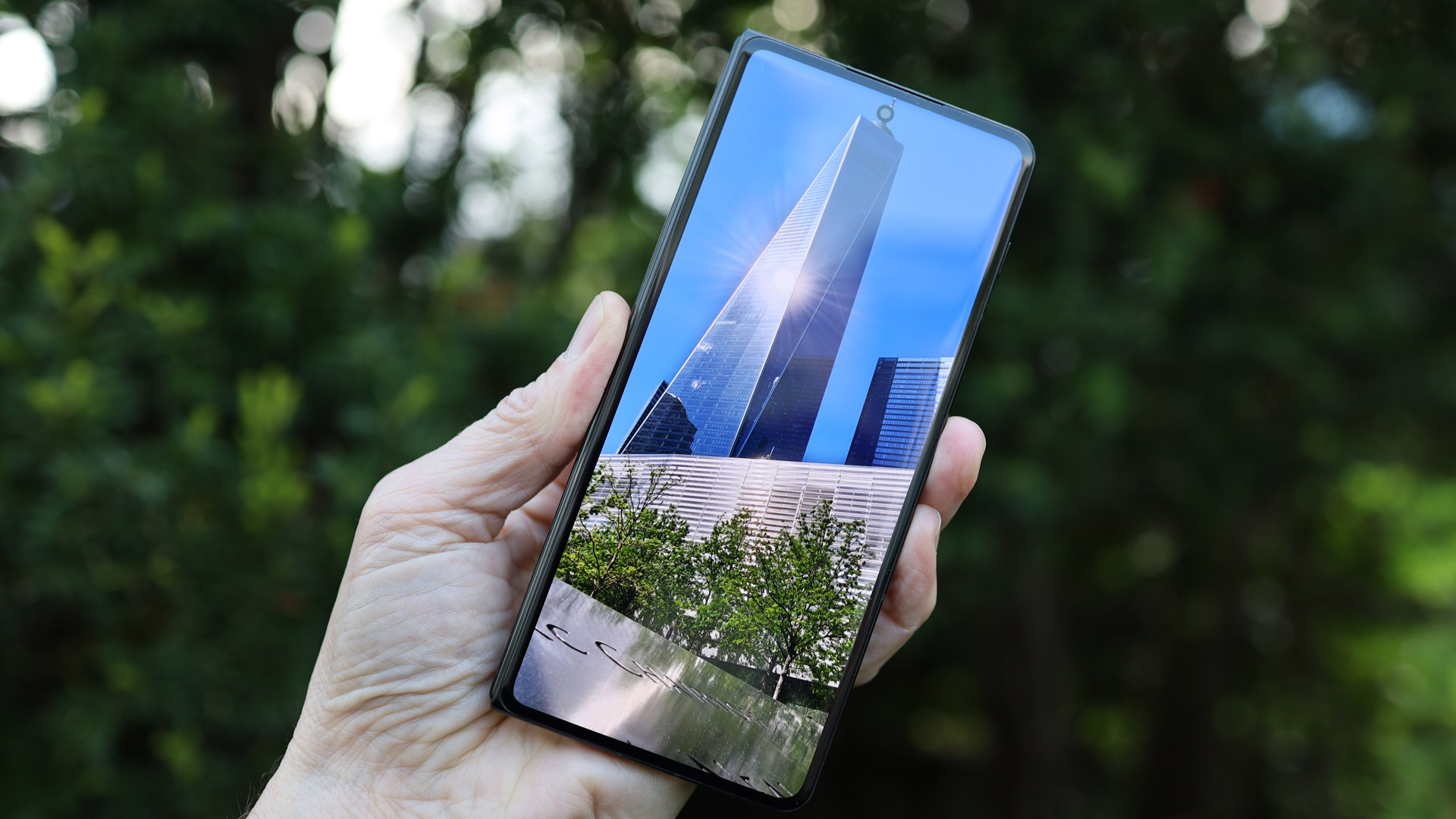
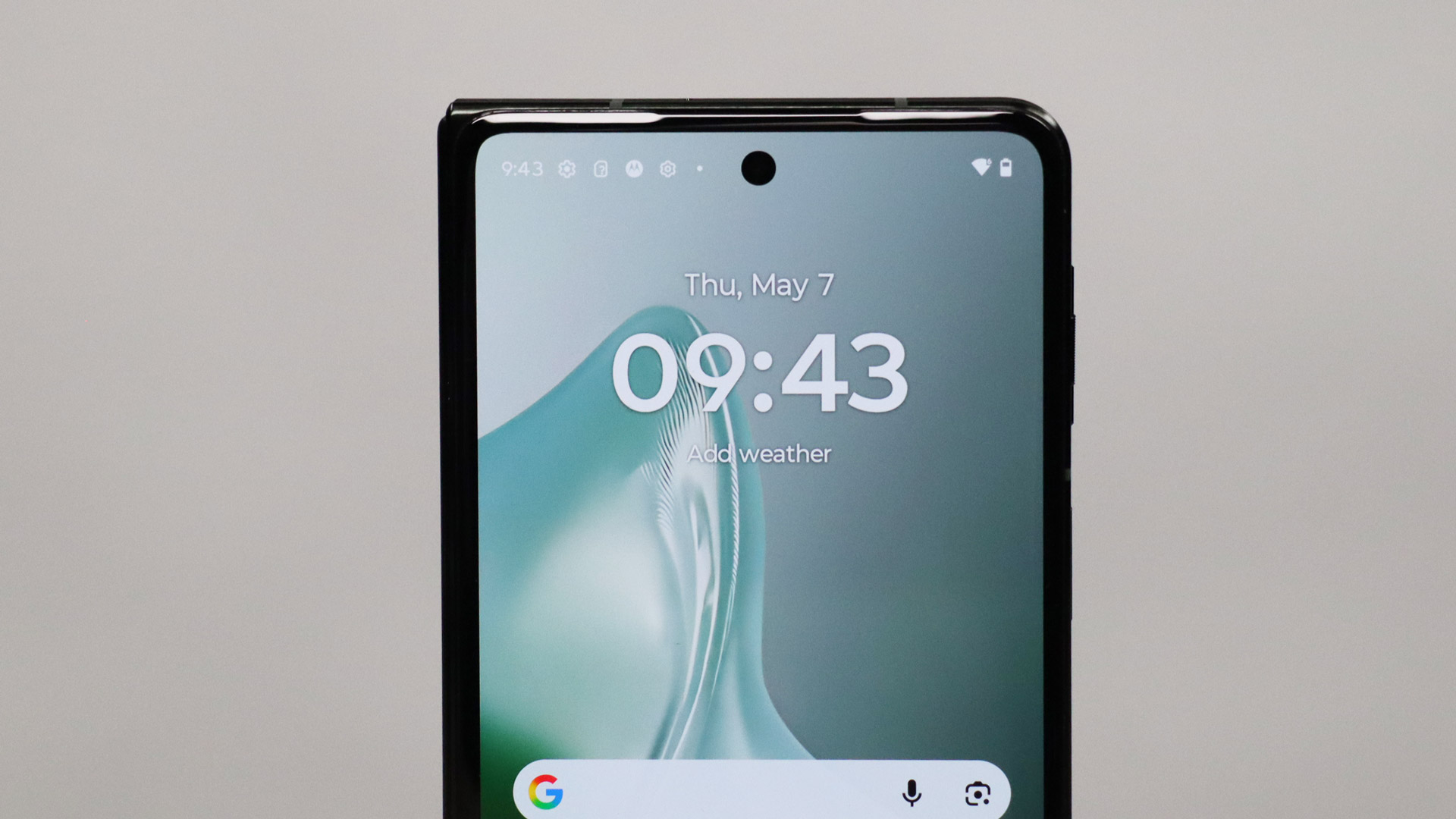
The Motorola Razr Fold 2026 offers a pair of excellent displays. The 6.6-inch cover display is indistinguishable from a standard flagship display. Despite being slightly larger, it matches the Galaxy Z Fold 7’s cover display resolution (2520×1080 pixels) and even uses essentially the same AMOLED screen technology.
I don’t love the waterfall glass design, but I do otherwise like looking at this high-resolution and smooth (up to 120Hz) adaptive display. Motorola rates both displays at 6,000 nits peak brightness, but our Future Labs tests found the numbers considerably lower.
This doesn’t mean the screens are dim, far from it. Instead, a peak nit rating is about operating in direct sunlight when your phone is doing all it can to stay visible. In my anecdotal testing, say, using the maps out on the streets, I found the screen fully viewable.
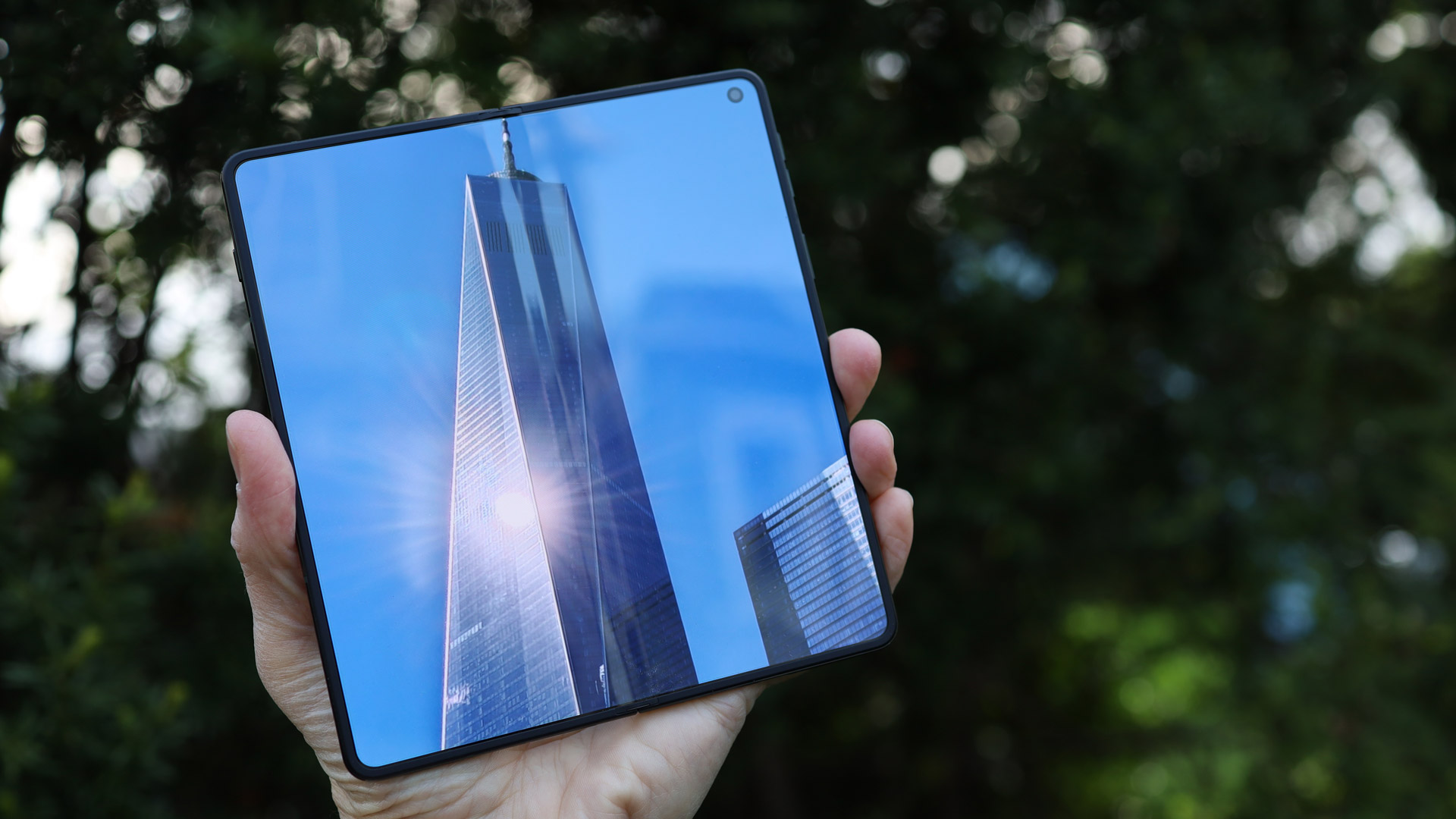
The 8.1-inch main or flexible display is bigger and, at 2484x 2232 pixels, offers higher resolution than the Galaxy Z Fold 7. It’s a lovely, up to 120Hz AMOLED screen with the added benefit of accepting pen input, which may be one reason it’s slightly thicker than the Galaxy Z Fold 7.
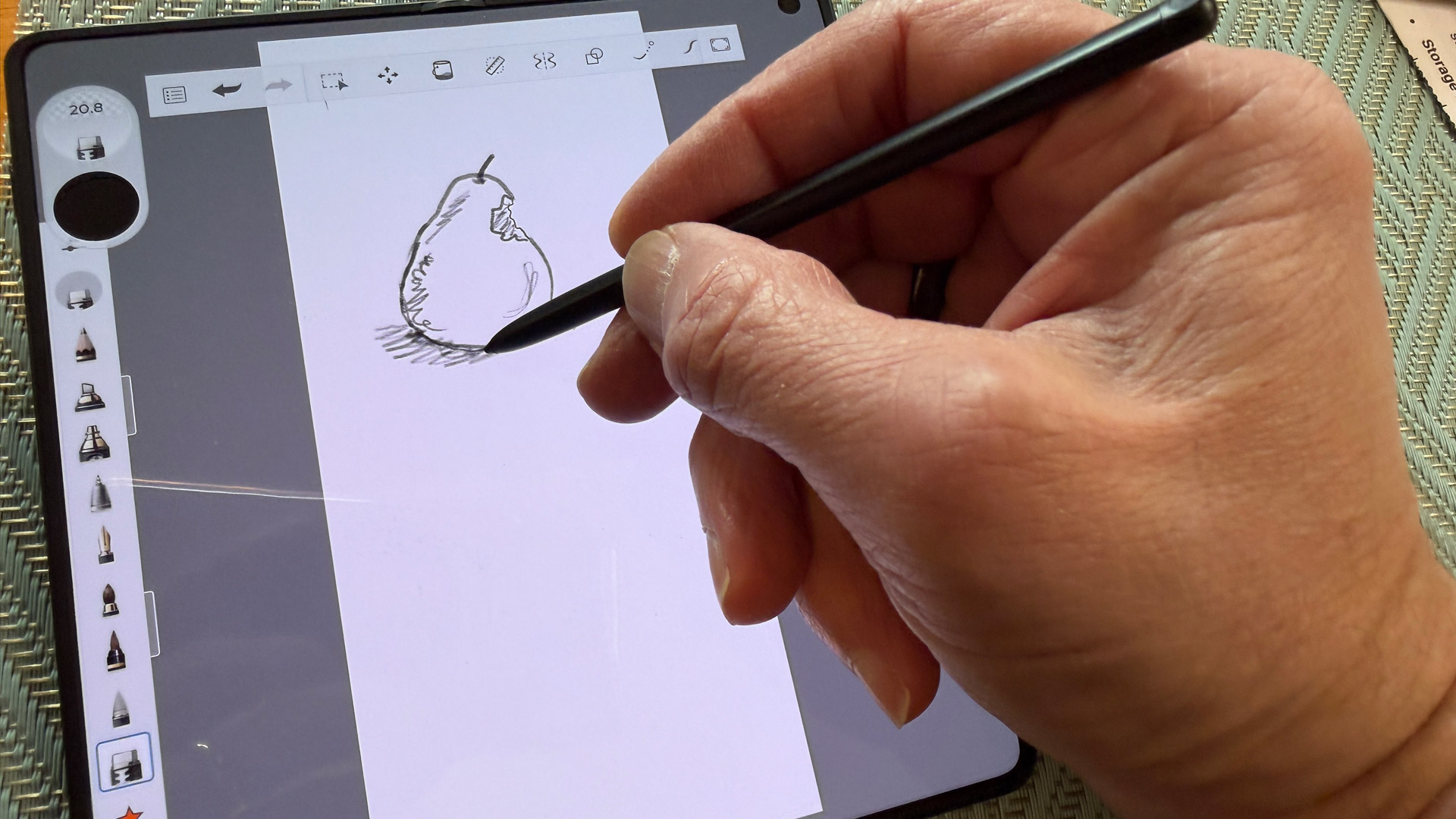
My test unit arrived with the optional $99.99 Moto Pen Ultra, and despite the ridiculous-looking, cigar-sized charging case, I highly recommend it.
I used the pen for annotations, writing search queries that the onboard AI did an excellent job interpreting, and drawing. However, while the display can handle pen input and is pressure sensitive, the screen will gently warn you if you are pressing too hard and running the risk of damaging the display.
Since everyone asks, Motorola has done a good job with the crease. It’s still visible when the screen is off, and you can feel it with your finger, but I challenge anyone to notice it when playing a full-screen game, taking pictures, viewing photos, or otherwise using the Razr Fold. I did feel the crease a bit when I was drawing, but again, it did not impede the “quality” of my work.
- Displays score: 5 / 5
Motorola Razr Fold review: Cameras
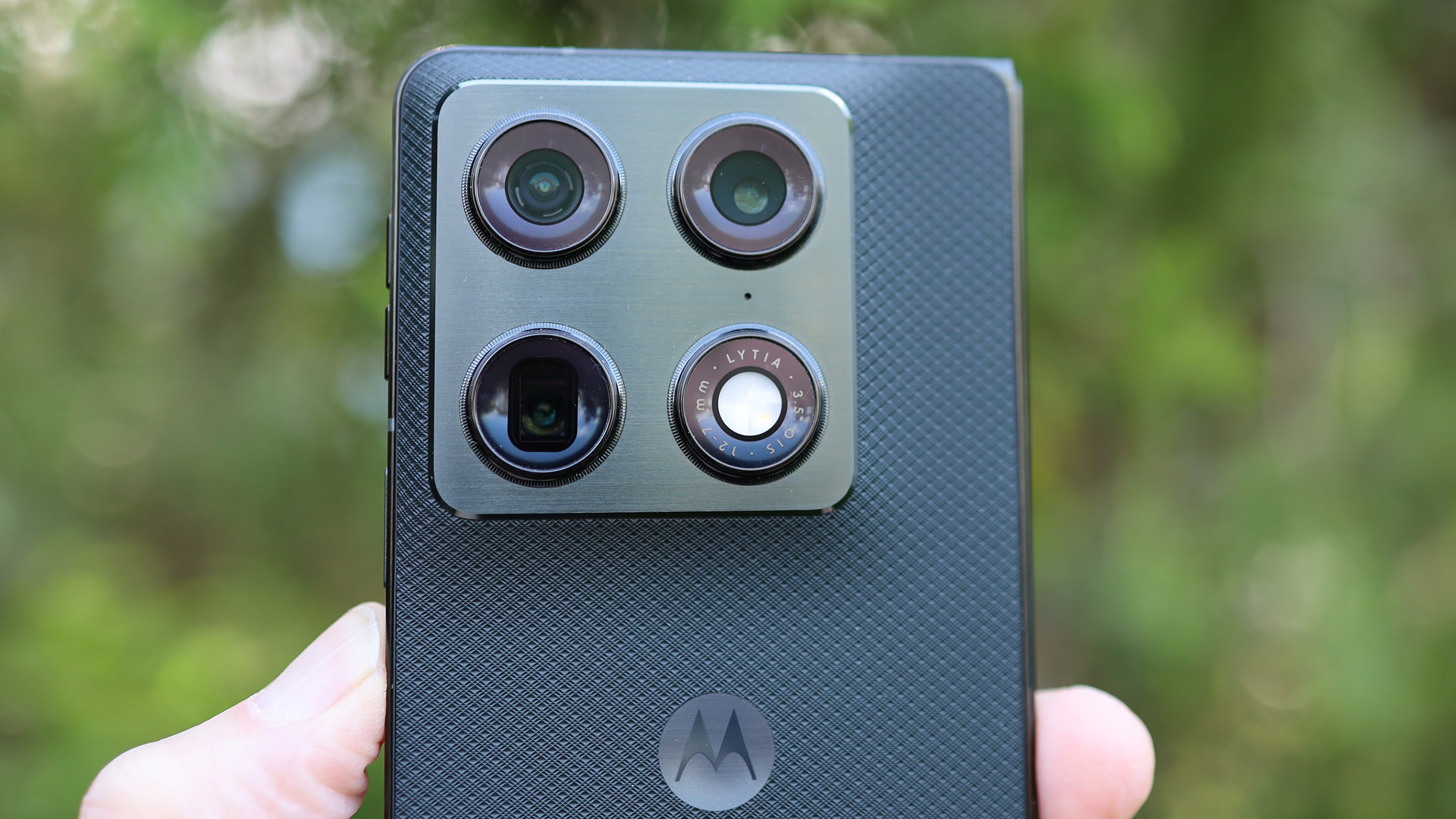
I may not love the camera array, but the Razr Fold 2026 does have an impressive collection of lenses (including the in-display ones):
- 50MP main camera
- 50MP ultra-wide camera
- 50MP periscope telephoto (3x optical zoom)
- 32MP internal front camera
- 20MP external front camera
Obviously, I can find foldables with higher megapixel counts, including a 200MP camera on the Galaxy Z Fold 7. Still, the main array’s collection of 50MP shooters across three shooting styles is pleasantly consistent. And, for what it’s worth, no one shoots in full megapixel formats. The majority of us shoot in binned mode, which means we usually capture 12MP images with 4 pixels-worth of information per megapixel.
Motorola’s cameras, including the selfie cameras on the main and cover displays, all take high-quality images. The colors are rich, and the clarity is good.
Overall, though, there is an unnaturalness to the palette. I think this is down to the on-board image-processing (which has an AI assist). It’s doing too much, making the blues too blue and the greens almost dayglo.
As for the sharpness, the images look good up to 100 percent, but closer examination beyond that, at, say, 200%, shows a sharp breakdown in quality. I just think Motorola’s image pipeline needs some tuning.
3X zoom is nice to have, though if you’re building in periscope technology, why not stretch it to 5X? I have no use for 100X Super Zoom, which is a digital approximation of what they systme thinks you should be seeing. None of these hyper-zoomed images holds up to scrutiny.
Landscape, portraits, city views, and still lifes all look good. There’s admirable performance on low-light images, macro with the ultra-wide is impressive, and portrait mode is solid. However, I did see some weird imperfections where the system couldn’t neatly separate me from my bokeh background.
I like that both selfie cameras have relatively high megapixel counts, but like any good folding phone, the Razr Fold lets you shoot a selfie using the best camera (50MP Main). It’s an easy-to-access setting in the camera app that puts the viewfinder on the cover screen, so when you hold the unfolded phone with the main camera array facing you, you can also see how you look in the frame and snap the picture with the on-screen digital shutter button.
The phone also shoots 4K video up to 60fps and 8K video up to 30fps. All of it, by the way, is shot with Dolby Vision. On the phone, it looks really good. Sadly, I found I had trouble editing the videos in PowerDirector.
- Camera score: 3.5 / 5
Motorola Razr Fold review: Camera samples

Motorola Razr Fold review: Software
- Moto AI isn’t all useful, but shows potential
- Neat splitscreen features
As an Android 16 phone, this is a relatively clean build with none of Samsung’s insistence on duplicating core apps like the Gallery and Web Browser. But it does arrive stuffed with AI options, including ChatGPT, Copilot, Perplexity, and, of course, Gemini.

Not to be outdone, there’s also Moto AI, which even includes its own Image Studio. Using the Moto Pen Ultra, I wrote that I wanted: an image of two dogs playing pickleball in front of a crowd.
I quickly noticed how, unlike say, the Image Playground in Apple Intelligence, Moto AI Image Studio was happy to give realism a try. Sadly, it took one paddle-weilding paw and stuck it in the furry chest of one dog. The faces of crowd members were also horrifying. By the way, the Moto AI image generation is not an unlimited tool. You get a limited number of image credits per day. They refresh every evening.
Generally, though, this is a very Google-centric phone with home screen access to Gemini, Google One, Google Meet, Chrome, and more.
When you open the phone to access the 8.1-inch display, you get extra features that take advantage of the screen real estate, like split screen and freeform, which let you run up to three apps on the screen at once.

I also found that I could use splitscreen with the phone set up in an L-shaped hybrid desktop. So the bottom half of the screen becomes the place to adjust settings, and the top half is the app screen you see. It’s also a cool, hands-free way to watch Netflix.
As I mentioned, there’s a lot of AI in here, and while the Moto AI stuff isn’t all useful, it shows potential. Catch-up will help you quickly figure out what you missed or should be doing right now, but it only works if you let the system access your personal data. The same goes for the Remember This Moto AI feature, which is basically an AI-powered Reminder system.
I don’t see much reason to use Perplexity or Copilot, not when I have Gemini on board, which is as effective here as it’s been on any other system.
- Software score: 4 / 5
Motorola Razr Fold review: Performance
- Qualcomm Snapdragon 8 Gen 5 chipset
- 16GB of RAM and 512GB of storage as standard
Motorola was smart to stick Qualcomm’s excellent Snapdragon 8 Gen 5 (backed by 16GB of RAM and 512GB of storage) inside its first full-fold flagship. It’s not Qualcomm’s latest and greatest chip (that accolade goes to the similarly-named Snapdragon 8 Elite Gen 5), but it can be thought of as the Android equivalent of Apple’s A18 chipset (which is still plenty powerful, albeit a rung below the top-end A18 Pro).
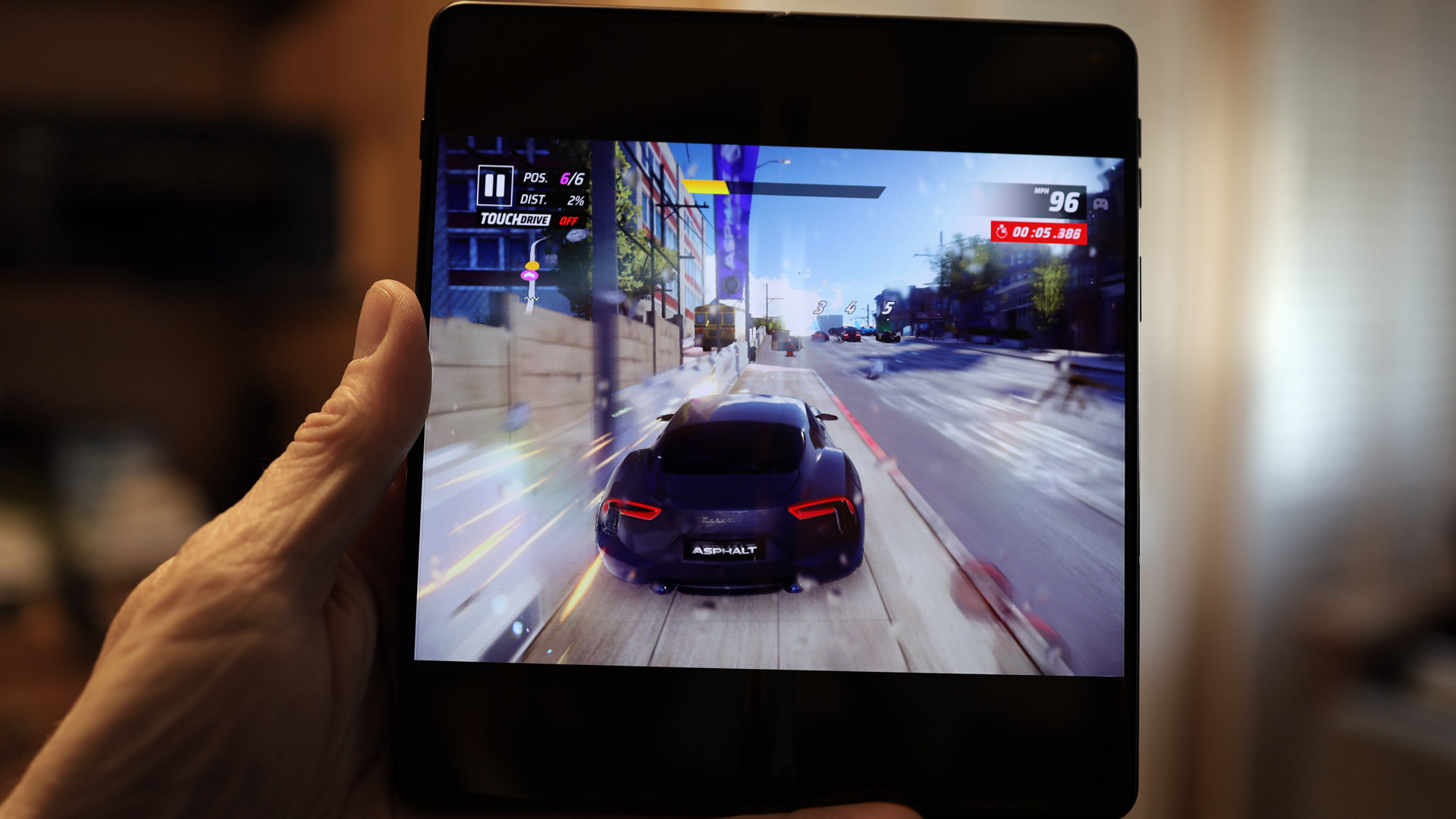
In practical operation, this is a peppy phone. Multiple apps run smoothly. Gaming in Asphalt: Legends and PUBG is a joy (yes, I connected Bluetooth headphones so as not to disturb my coworkers), and AI operations are generally quite fast.
- Performance score: 4.5 / 5
Motorola Razr Fold review: Battery
- 6,000mAh battery yields two days of use
- First silicon-carbon battery in the US mobile market
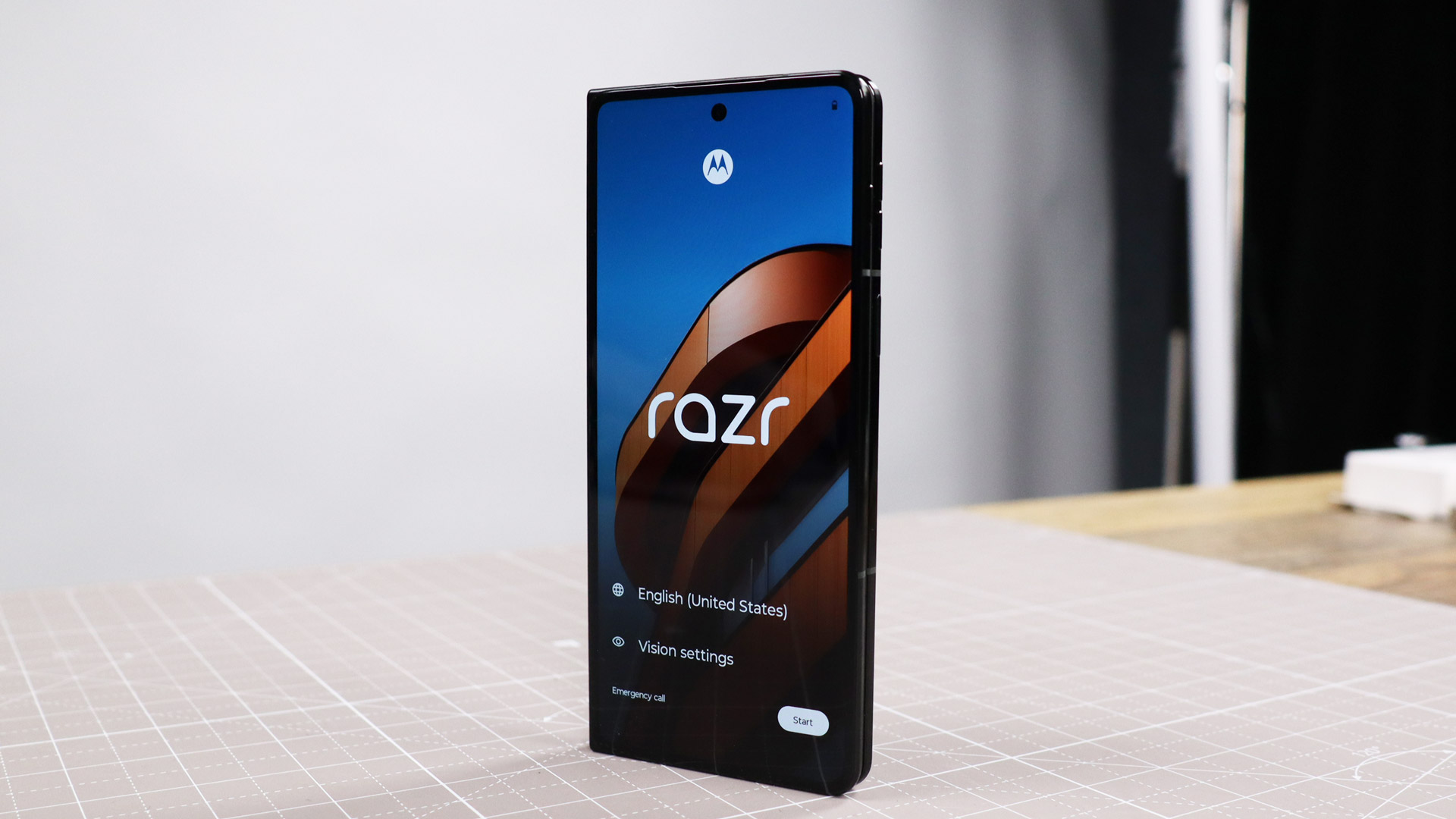
At 6,000mAh, the Motorola Razr Fold features one of the largest batteries we’ve seen in the folding space, but it’s the chemistry that counts here. This is the first silicon-carbon battery in the US mobile market, and it brings with it some special capabilities.
First of all, it has those milli-amp hours, but still fits in a thin folding frame. Secondly, it’s more efficient, and third, it can recharge with an 80W charger. Though it ships with only a USB-C cable, and I didn’t have a charger on hand, my anecdotal battery tests left me impressed.
Okay, our Future Labs tests put battery life between 14 and 16 hours. That’s not bad for a dual-screen foldable, but in my more varied use, I got at least two days per charge: the Razr Fold seemed to just sip battery power.
Your mileage may vary, but for me, this was a real highlight of my tests.
- Battery score: 5 / 5
Should you buy the Motorola Razr Fold?
Swipe to scroll horizontally
|
Value |
Not cheap but does undercut the best foldable in the space |
4/5 |
|
Design |
Relatively thin and light, but the massive camera array and slightly curved screen are turn-offs |
5/5 |
|
Display |
Two excellent displays full of sharp imagery, fast performance, and lots of versatility. Pen support is a definite plus. |
5/5 |
|
Cameras |
Lots of high-megapixel cameras but image processing needs some work |
3.5/5 |
|
Software |
Not too much bloat and access to all the right Google tools. Too much AI, probably. Is Moto AI worth it? Almost. |
4/5 |
|
Performance |
A powerful Qualcomm chip backed by lots of RAM; what more could you ask for? |
4.5/5 |
|
Battery |
New silicon-carbon technology makes for a thin phone with really good battery life. |
5/5 |
Buy it if…
Swipe to scroll horizontally
| Header Cell – Column 0 |
Google Pixel 10 Pro Fold |
Samsung Galaxy Z Fold 7 |
|---|---|---|
|
Price |
$1,799 / £1,749 / AU$2,699 |
$1,999.99 / £1,799 / AU$2,899 |
|
Display(s) |
6.4-inch OLED |
6.5-inch LTPO AMOLED |
|
Main Camera |
48MP, f/1.7, 0.5-inch sensor |
200MP, f/1.7, 0.76-inch sensor |
|
Battery Test Results (HH:MM:SS) |
12:16:31 |
10:44:44 |
How I tested the Motorola Razr Fold
I spent a week with the Motorola Razr Fold 2026, carrying it with me everywhere and using it in a. variety of scenarios. I used a combination of my own benchmarks and battery rundown tests, and those from Future labs.
I’ve been a journalist for 40 years, writing about technology for 37 years, and have covered mobile phones for 25 years.
First reviewed May, 2026

A 38-year industry veteran and award-winning journalist, Lance has covered technology since PCs were the size of suitcases and “on line” meant “waiting.” He’s a former Lifewire Editor-in-Chief, Mashable Editor-in-Chief, and, before that, Editor in Chief of PCMag.com and Senior Vice President of Content for Ziff Davis, Inc. He also wrote a popular, weekly tech column for Medium called The Upgrade.
Lance Ulanoff makes frequent appearances on national, international, and local news programs including Live with Kelly and Mark, the Today Show, Good Morning America, CNBC, CNN, and the BBC.
