

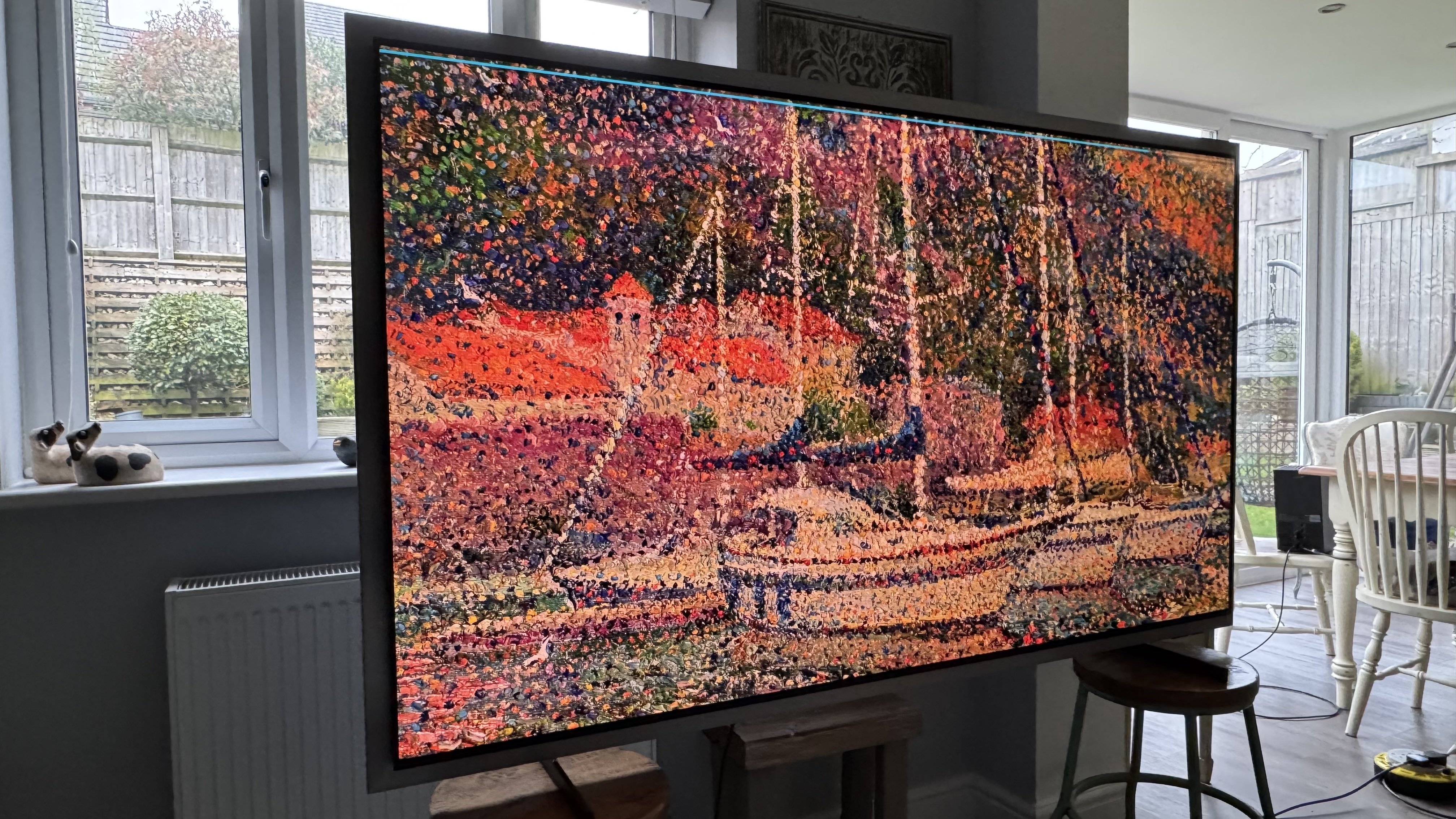
The first Samsung TV of 2026 has finally fully emerged from the depths of the brand’s R&D department — and I’m here to tell you that from what I’ve seen so far of the epic S99H (or S95H as it’s known in the US), this TV has the potential to be seriously special.
While the S99H isn’t in stores yet for you to check out for yourselves and hasn’t yet run the gauntlet of the full TechRadar testing team, I’ve been lucky enough to spend a few days with the 77-inch model already (it also comes in 55-inch, 65-inch and 83-inch sizes).
During that time, it’s become clear that it delivers a substantial step up over its already-talented Samsung S95F predecessor — and TechRadar rated that set as the TV of the Year in 2025.
Article continues below
The big changes start with the S99H’s design. Samsung typically prides itself on incredibly slim, minimalistic flagship TV designs, so it’s quite a shock to find the 77-inch S99H’s already large screen framed by an eye-catching outer frame that extends well over an inch around all four of the screen’s edges.
Given how much bigger it makes an already big screen, the S99H’s so-called FloatLayer design is likely to be controversial. The fact that the metallic outer frame is set back from the protruding screen, though, creates an unusual ‘three-dimensional’ viewing experience that I personally found more immersive and cinematic than anything I’ve had with typical flat, ‘single-layer’ TV.
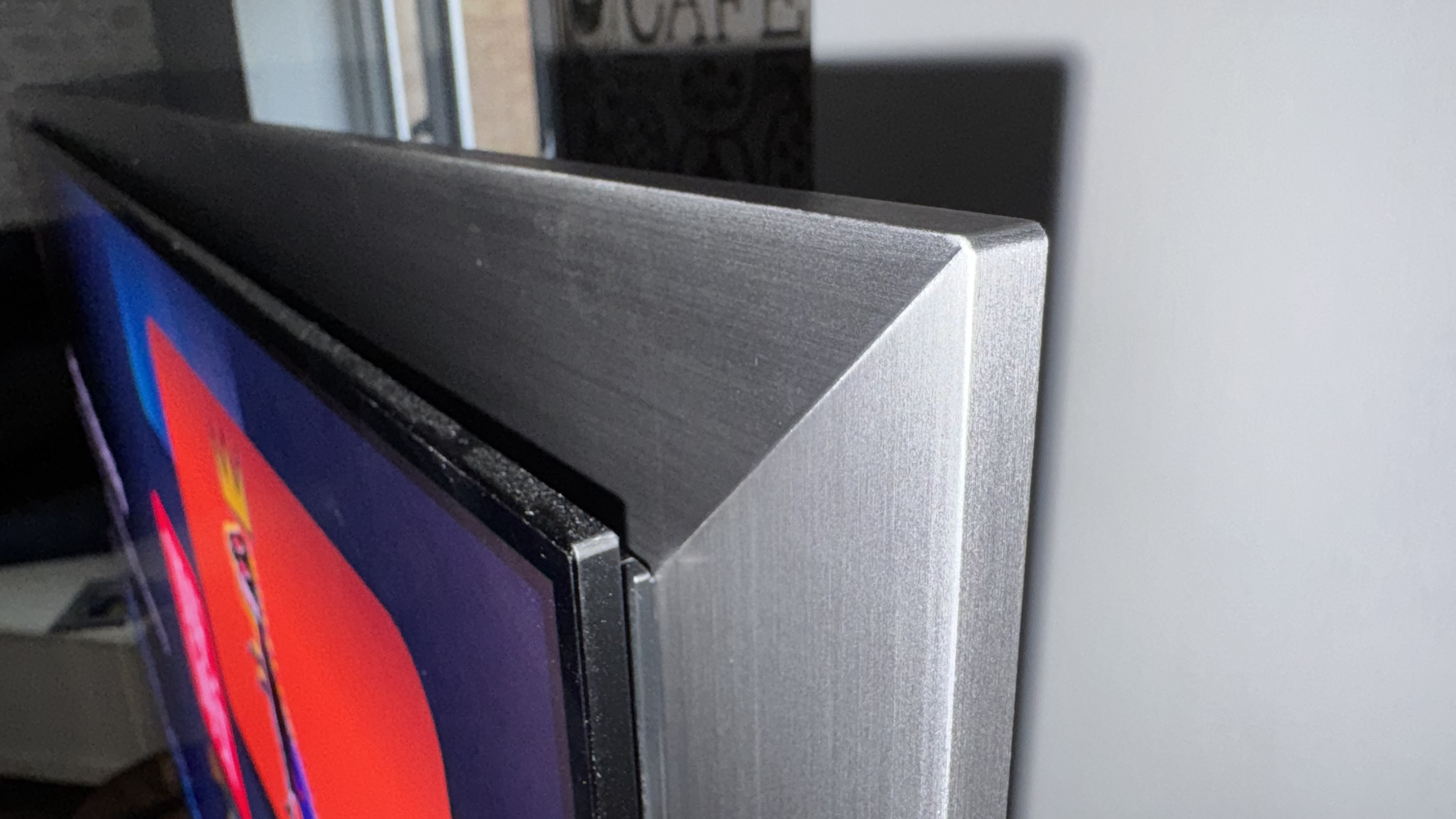
The clever design extends to a nifty reflective neck for the provided desktop stand that makes the screen look like it’s floating in mid air, and there’s some well defined cable channeling around the back panel.
Another big new feature for the S99H, though, means that you don’t actually need to connect any of your sources directly to the TV if you don’t want to.
It’s possible to buy an optional extra Wireless One Connect box for the S99H that not only adds an extra four HDMI 2.1 ports to the four already found on the TV itself, giving you a total of eight, but also means you can watch the pictures and sound from up to four sources without having any cable other than the power cord running into the TV.
This wireless box adds just under 30ms to the time the TV takes to render images, meaning gamers should probably stick with connecting their consoles and PCs directly to the main TV, but otherwise this optional wireless connection box takes the S99H’s connectivity into unprecedented territory for sheet number of ports.
The S99H’s picture features and quality appear to have undergone an impressive transformation, too. The QD-OLED technology at their heart has been pushing brightness forward at a phenomenal rate with each new generation, and the 77-inch S99H continues this trend by managing to hit almost 4,500 nits on tiny HDR windows (up more than 12% on last year’s S95F), and hits nearly 2,800 nits even on a 10% test window.
In fact, in a major assault on mini-LED TV territory, the S99H even manages to maintain brightness above 500 nits on a fullscreen 100% white HDR test window. T
his all feeds into an HDR performance of staggering dynamism and punch but also impressive consistency in the S99H’s Standard preset, backed up by those pure colours that are QD-OLED’s trademark, and the pixel-level light control and beautifully deep, consistent black colours that home cinema fans now expect from any OLED screen.
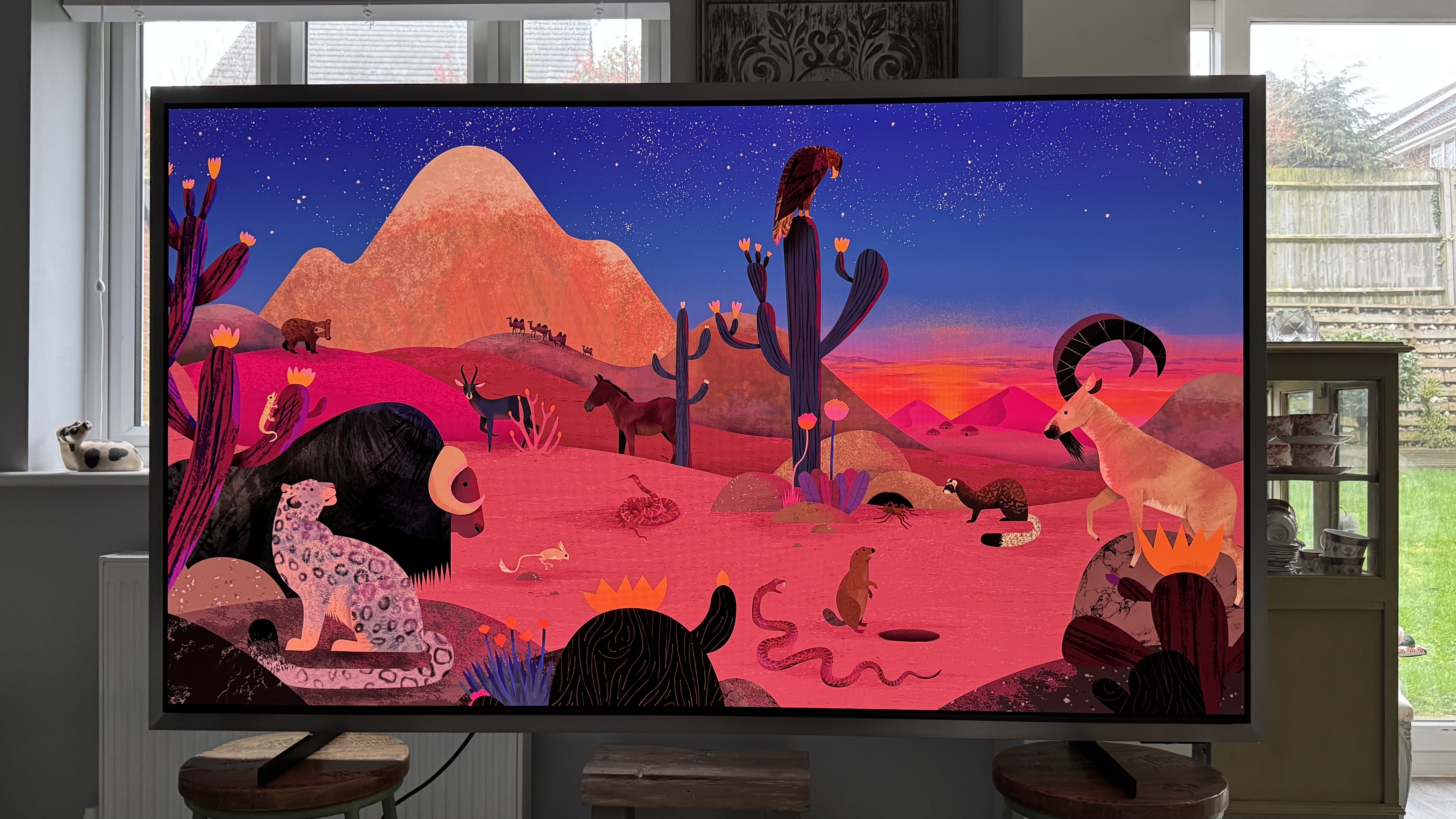
The S99H’s Standard preset doesn’t just look so far to be even more spectacular than that of its predecessor, though; it also looks better, offering more refinement and tighter control at the image’s extremes to minimise any glitches that might distract you from what you’re watching.
Before anyone worries, though, that the S99H cares only about showing off the extremes of what its panel can do, its Filmmaker Mode also looks so far be a triumph, at least from a ‘hitting the numbers’ perspective.
In my early tests (made without tinkering with the preset’s settings at all) it delivered the most accurate results I’ve ever seen across all of my Calman Ultimate software’s greyscale and colour tests.
Samsung’s latest anti-reflection screen filter seems from early viewing to have been improved again too, still removing pretty much all reflections from the screen but now retaining slightly deeper black levels when the filter is having to work really hard in a very bright environment.
Upgrades from inside out
While some of this apparently improved precision from the S99H will be down to improvements to its QD-OLED display, Samsung’s latest NQ4 AI Gen 3 processor with its 128 neural networks is surely playing a part, too.
This is now powerful enough to apparently automatically tune the brightness of each and every pixel in real time, to optimise the impact of its screen with any incoming video. Plus, this year, the S99H is going to be getting support for the new ‘HDR10+ Advanced’ format.
The next-gen form of HDR10+ adds six new enhancements to the previous premium HDR system in a bid to make HDR look brighter, more dynamic (while still tracking creative intent) smoother (but only to a degree set by content creators), and more accurately coloured, while also being able to adapt its workings better to different genres of content and cloud gaming.
The new AI processor also provides advanced recognition of the type of sport you’re watching through such elements as the distribution of grass, the presence of scoreboards, pitch markings, baseball bats, tennis rackets and the like, so that it can focus its ball-tracking motion processing elements more accurately. So you shouldn’t end up seeing artefacting in the picture if you opt to apply motion processing to a sport source.
The latest AI system introduces an audio improvement, too, that lets you divide any soundtrack up into separate voice, music and effect elements so that you can then manually adjust the balance of each element to suit your hearing, combat ambient noise, or just make a particular element clearer with specific TV show or movie mixes.
I’ve already mentioned AI quite a bit through this look at the S99H, but this being a Samsung TV we’re not done with AI quite yet. For starters the latest Samsung smart remote control introduces a dedicated AI button that takes you directly to a new onscreen menu devoted purely to the TV’s extensive AI smart features.
These now include not one but two third-party AI systems, Co-Pilot and Perplexity. Why two? Because, says Samsung, each one offers different areas of specific expertise. You can manually choose which AI assistant you want to use, or else the TV will try to pick the best one for you, depending on what you’ve asked the TV to do.
One last welcome usability change I’ve noticed on the S99H in my time with it so far is that Samsung has moved the set of icons you use to move between different submenus from the main Tizen home hub to the top of the screen, rather than ranging them down the left. This makes the home screen look much cleaner and less intimidating.
Needless to say the TechRadar team is raring to bring you a full review of Samsung’s S99H/S95H range as quickly as we can, without rushing anything. From what I’ve seen so far, though, things are looking very promising indeed.
Thinking of buying a new TV?
Try our TV size and model finder! You tell it how far you sit from your TV, we’ll tell you what size to buy based on viewing angle advice from image quality experts, and we’ll recommend our three top TVs at that size for different prices.
Follow TechRadar on Google News and add us as a preferred source to get our expert news, reviews, and opinion in your feeds. Make sure to click the Follow button!
And of course, you can also follow TechRadar on YouTube and TikTok for news, reviews, unboxings in video form, and get regular updates from us on WhatsApp too.
