

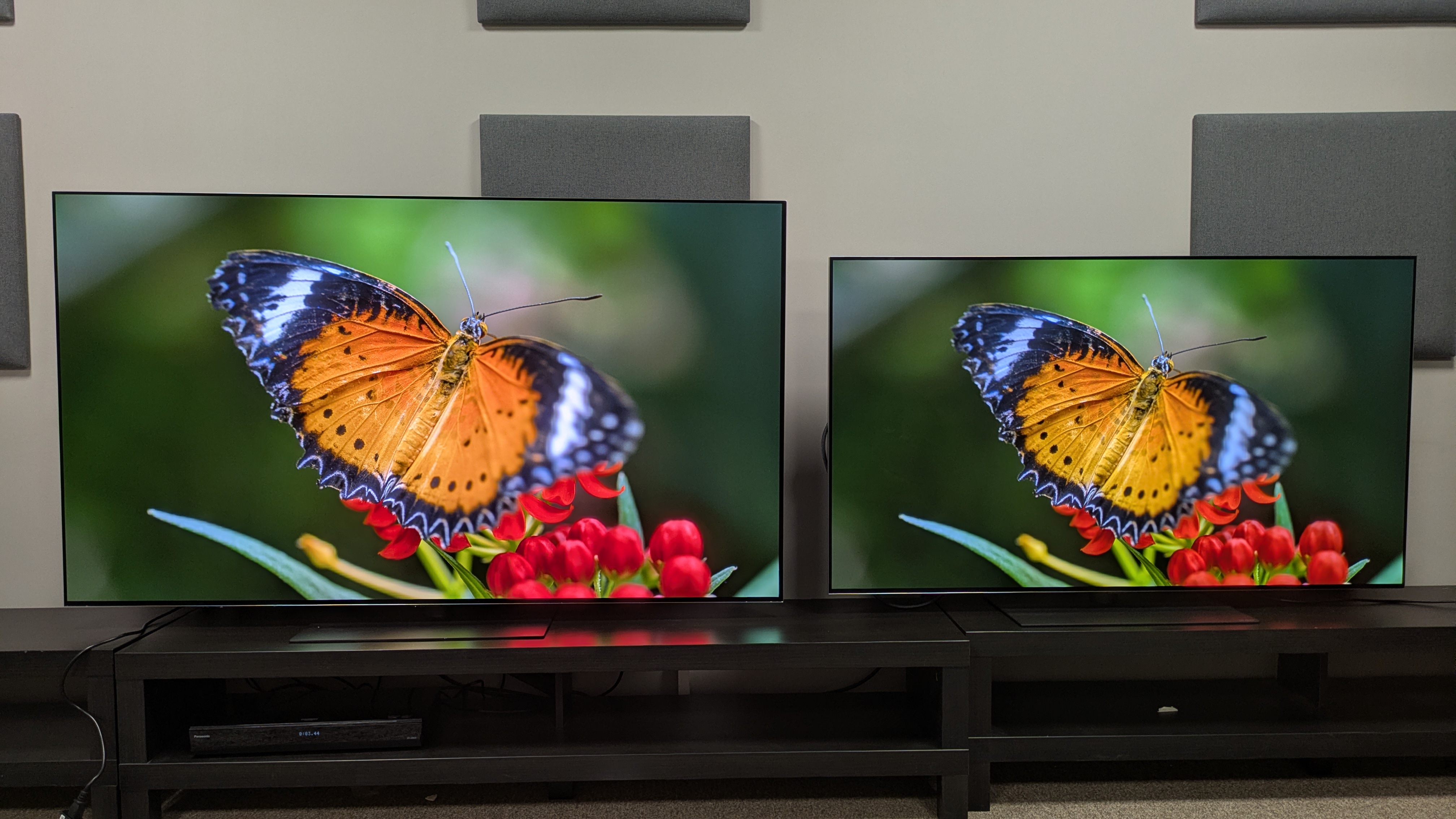
The LG G5 was one of the best-performing TVs of last year, delivering superb picture quality with gorgeous colors and strong contrast. It was also one of the best options for gaming, with a full suite of features and razor-sharp performance, as well as an intuitive smart TV platform. While it was a premium TV, it was good value for what it delivered.
Its successor, the LG G6, has some mighty big shoes to fill. Earlier this year, I saw the LG G6 and LG G5 side-by-side at a demo event, but now the G6 has now arrived in our testing labs for longer-term testing.
Article continues below
Brightness and reflections
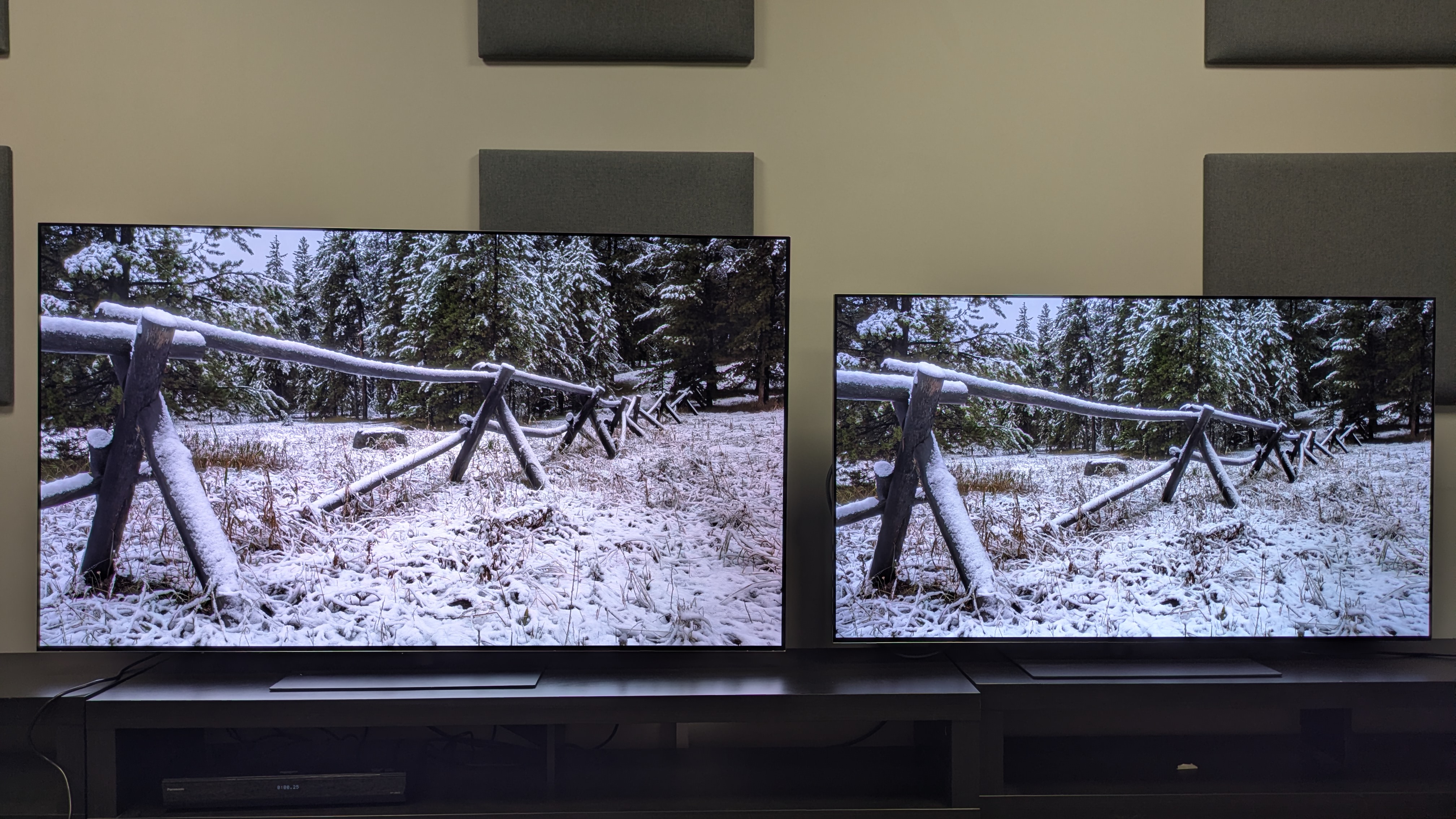
Equipped with a new-gen Primary Tandem RGB OLED 2.0 panel, the LG G6 promised a brightness upgrade over its predecessor, and it’s delivered. The G6 registered 2,471 nits of peak HDR brightness (10% window) in Filmmaker Mode, compared to the G5’s 2,268 nits. While this is only an incremental increase, fullscreen HDR brightness (100% window) in Filmmaker Mode on the G6 clocked in at 455 nits, which is a huge jump from the G5’s 331 nits.
But what does this mean for pictures? In brighter scenes, such as a series of clips of snow from the Spears & Munsil UHD Benchmark’s demo material, the G6 has higher brightness in fullscreen parts of the picture.
While the G5 actually appears brighter in some peak areas, such as the snow on the fence in the photo above, this is likely due to intentional Filmmaker Mode tweaks, where G6 pulls back on the vibrancy. This results in a more balanced picture, with no over-exertion of bright tones, which is how the G5 can appear at times.
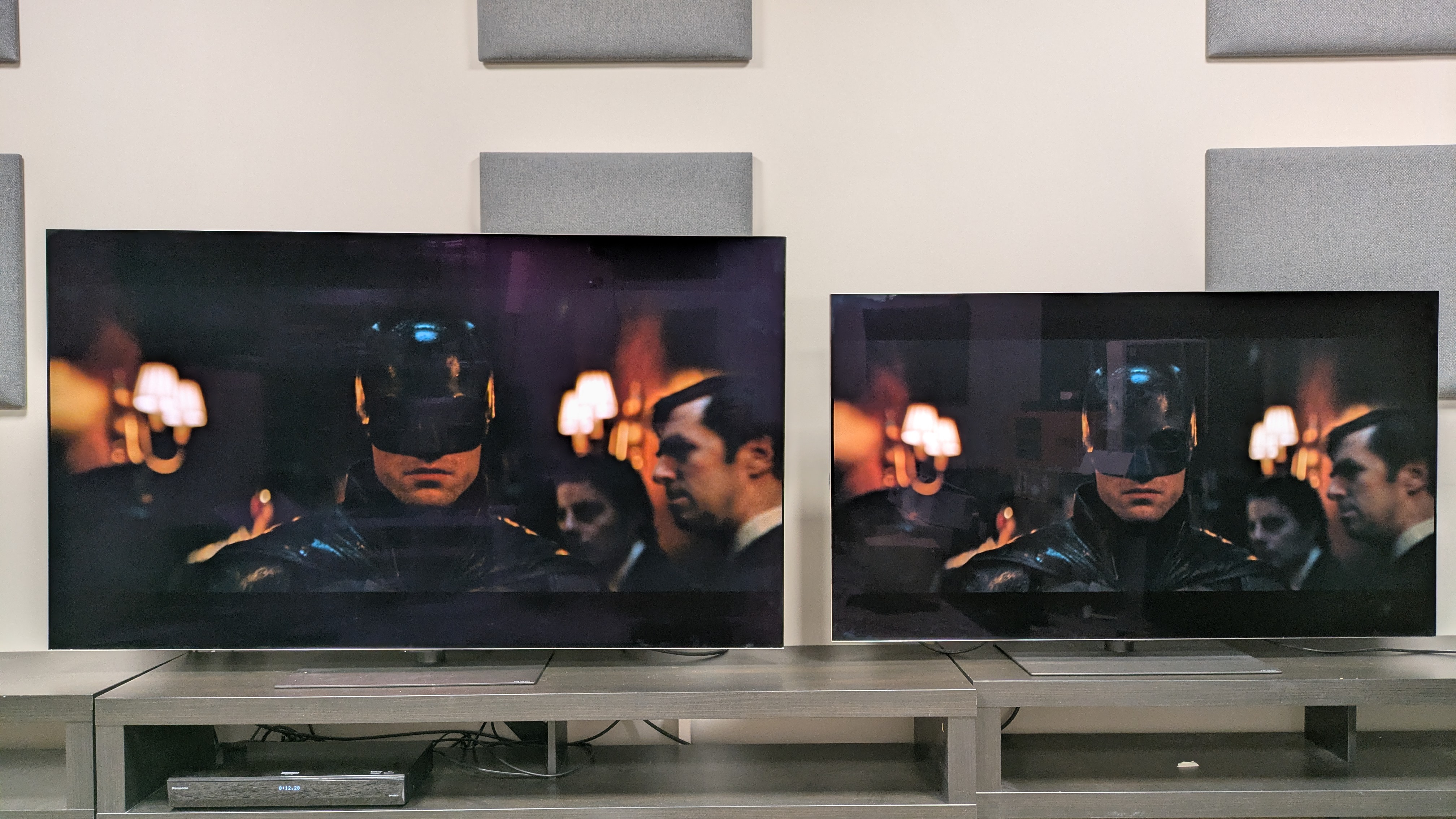
One area where the G6 shows a real upgrade over the G5 is reflection handling. While the G6 still shows some mirror-like reflections, they are significantly reduced compared to the G5.
Watching darker scenes from movies such as The Batman, Alien: Romulus and Dark City in bright conditions, with overhead lights on in our testing lab, the G5 actually has higher perceived brightness, but the obvious mirror-like reflections make viewing difficult.
The G6, despite appearing dimmer, is much better at reducing mirror-like reflections, leaving a cleaner and more distration-free image, as is clear in the photo above. The G6 even looks better than the Samsung S95F’s matte anti-reflection screen in bright rooms, balancing the pros and cons the two TV’s approaches to beating reflections.
Contrast and shadow detail
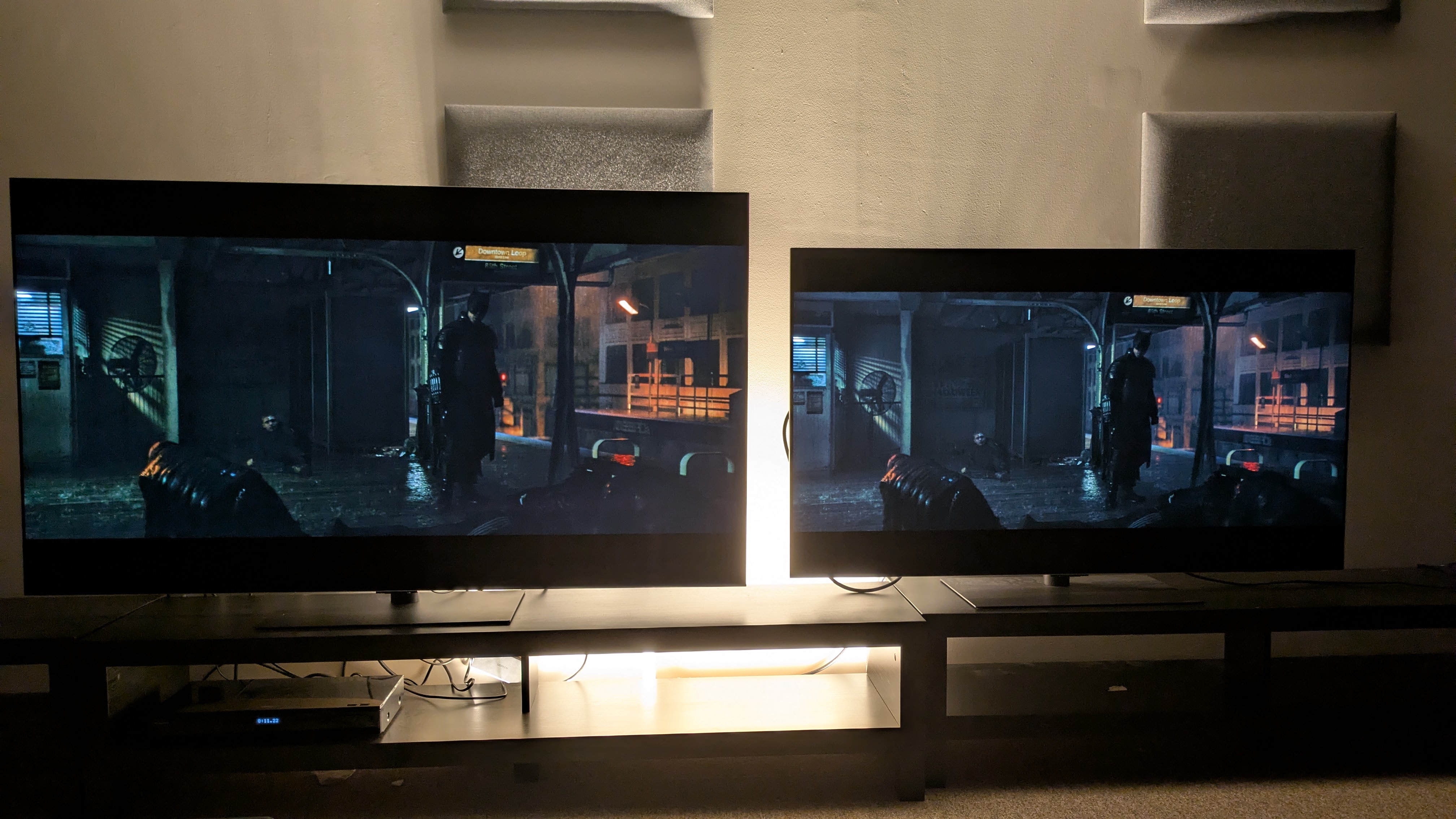
Using The Batman, one of my go-to discs for contrast testing because it’s so damn dark, both the G6 and G5 demonstrate very strong contrast with a great balance between light and dark tones. As Batman walks through the halls and rooms of Mayor Mitchell’s house, the lamps on the wall and flash bulbs of cameras have a nice punch on both TVs and contrast well with the dark walls and floors.
Where the G6 impresses is that not only do peak areas on screen, such as the aforementioned lamps, look brighter than the G5 but blacks are deeper resulting in more natural looking contrast.
The G5’s dark tones appear raised in comparison, so while the G5 may appear the more eye-catching on the surface, the G6 appears to be the more accurate result. This follows what LG told me about how the more restrained Filmmaker Mode on the G6 is “by design” in the pursuit of accuracy.
Both TVs demonstrate great shadow detail, with objects and textures in dark areas on screen still visible. As Bruce enters the Batcave, rocks and steel in the roof are still defined on both TVs and again, although it’s marginally more visible on the G5, the G6 strikes that nice balance between detail and black accuracy.
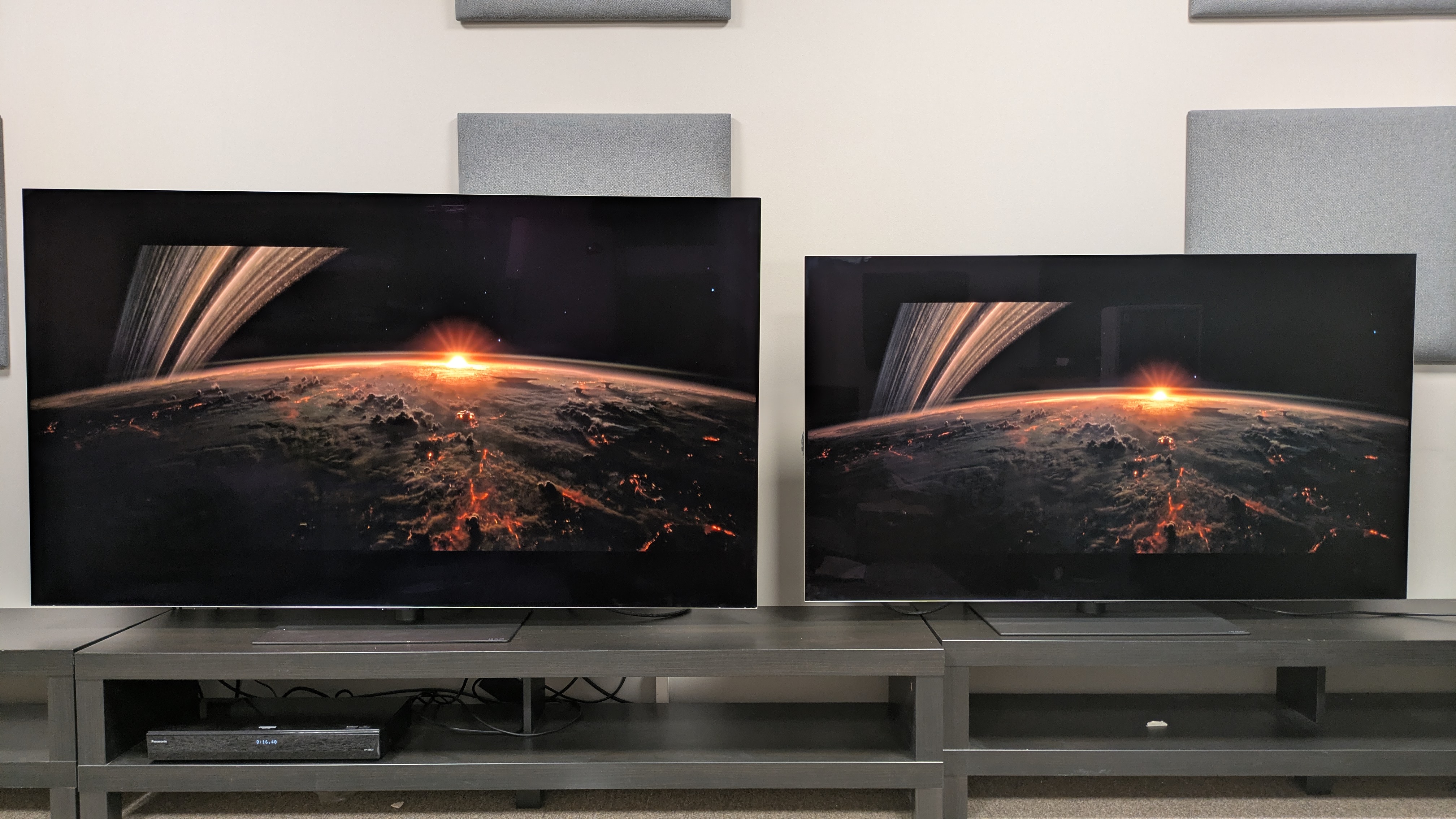
Alien: Romulus is another movie with plenty of high contrast scenes. Both TVs deliver strong shadows and deep black levels, but the G6’s are deeper and more authentic. Again, shots of space show the G5’s blacks are marginally raised in comparison, but are still solid overall.
Again, the G6 was best for watching in bright rooms as although the G5 was brighter, revealing more details in dark areas such as the textures of the ship’s panelling, the G6 did a better job with reflections, so more of the picture was clearer.
Colors
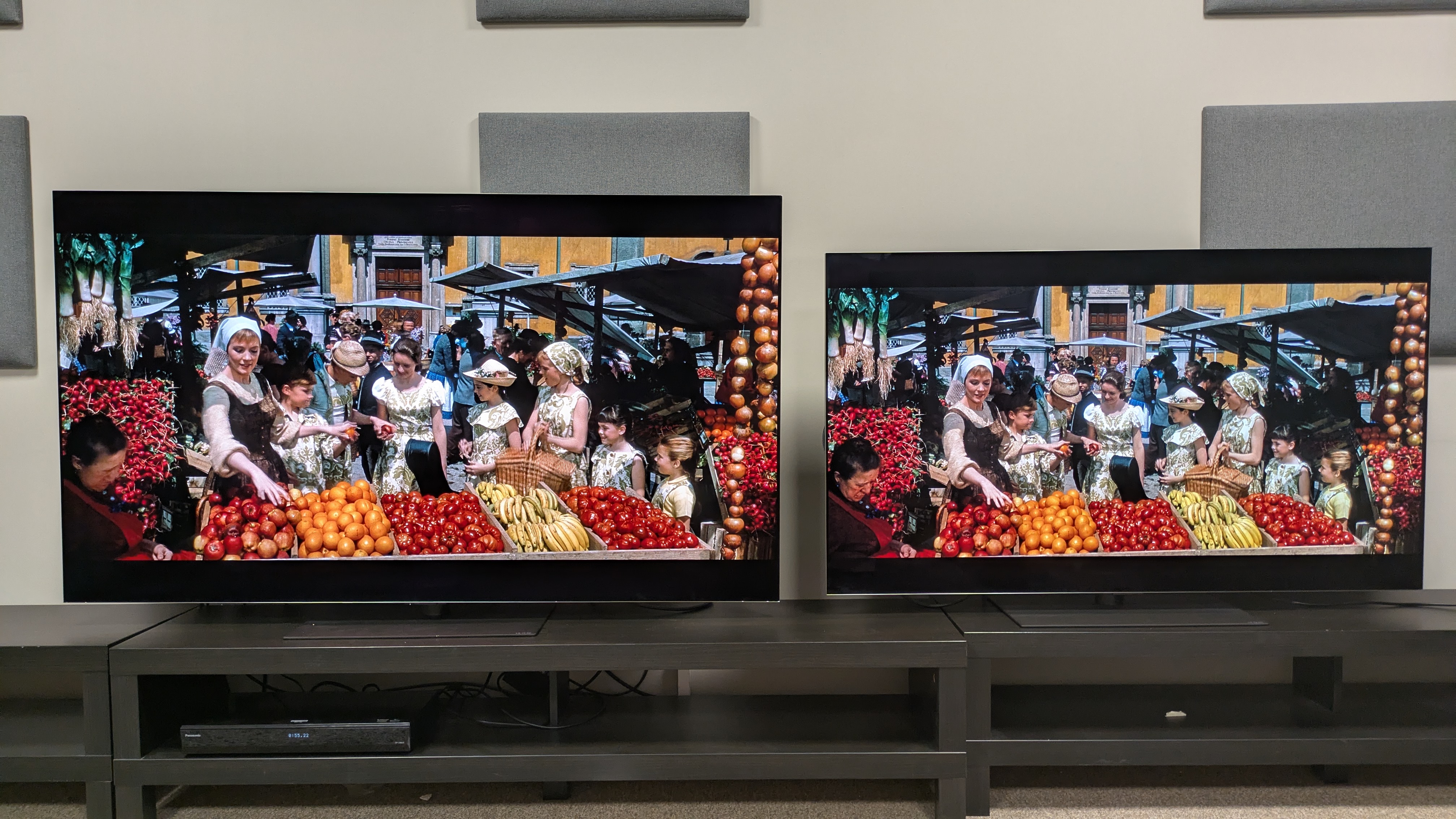
Colors are the most obvious place where LG has intentionally dipped the vibrancy of the G6 in Filmmaker Mode compared to the G5. Watching The Sound of Music, colors do look brighter and more saturated on the G5.
But it’s the G6 that looks better on the whole. The red, yellow and orange fruits in the market stall appear more natural on the G6, while also still having a nice punch to them. Colors also appear more balanced on the G6, with brighter colors contrasting more appealingly with paler colors, and a deeper and more beautiful richness to every hue.
This is the case with the green grass and blue sky against the white clouds and brown mountain during the Do Re Mi scene. On the G6, everything appears more realistic, whereas some areas on the G5 look a touch too punchy and bright in comparison.
Skin tones are another area where the G6 appears more accurate. On the G5, they can sometimes look too red, whereas on the G6 skin tones appear more true-to-life, with a more consistent color throughout.
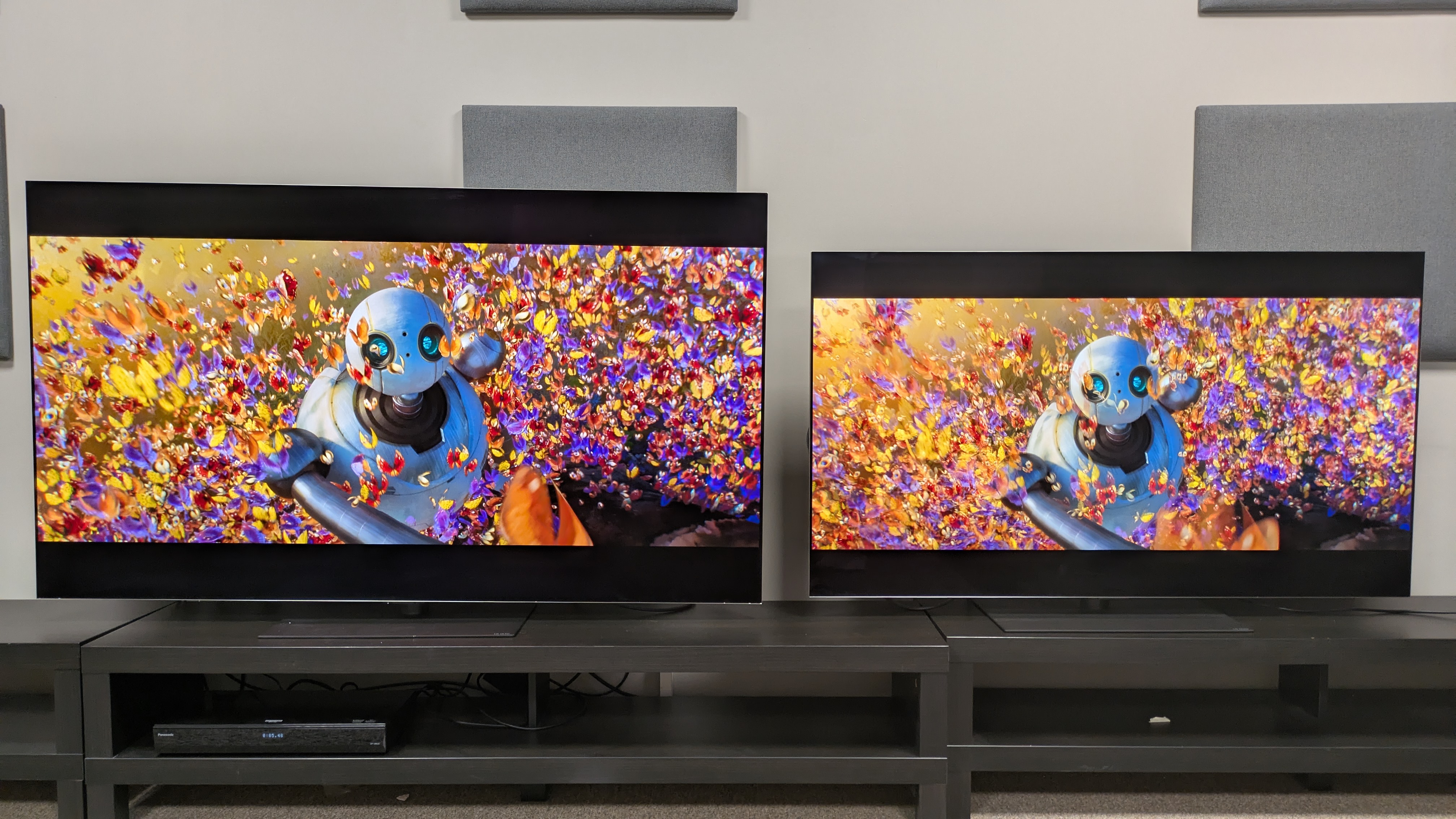
Switching to an animated movie, The Wild Robot, again colors have the higher perceived brightness on the G5, but look more authentic on the G6, with more color depth.
As Roz is surrounded by multi-colored butterflies and explores the lush, green woods, the G6 appears to have a more rounded color profile. While the G5’s color reproduction is still brilliant, with a good punch and richness, the G6 is the more complete package.
Sound
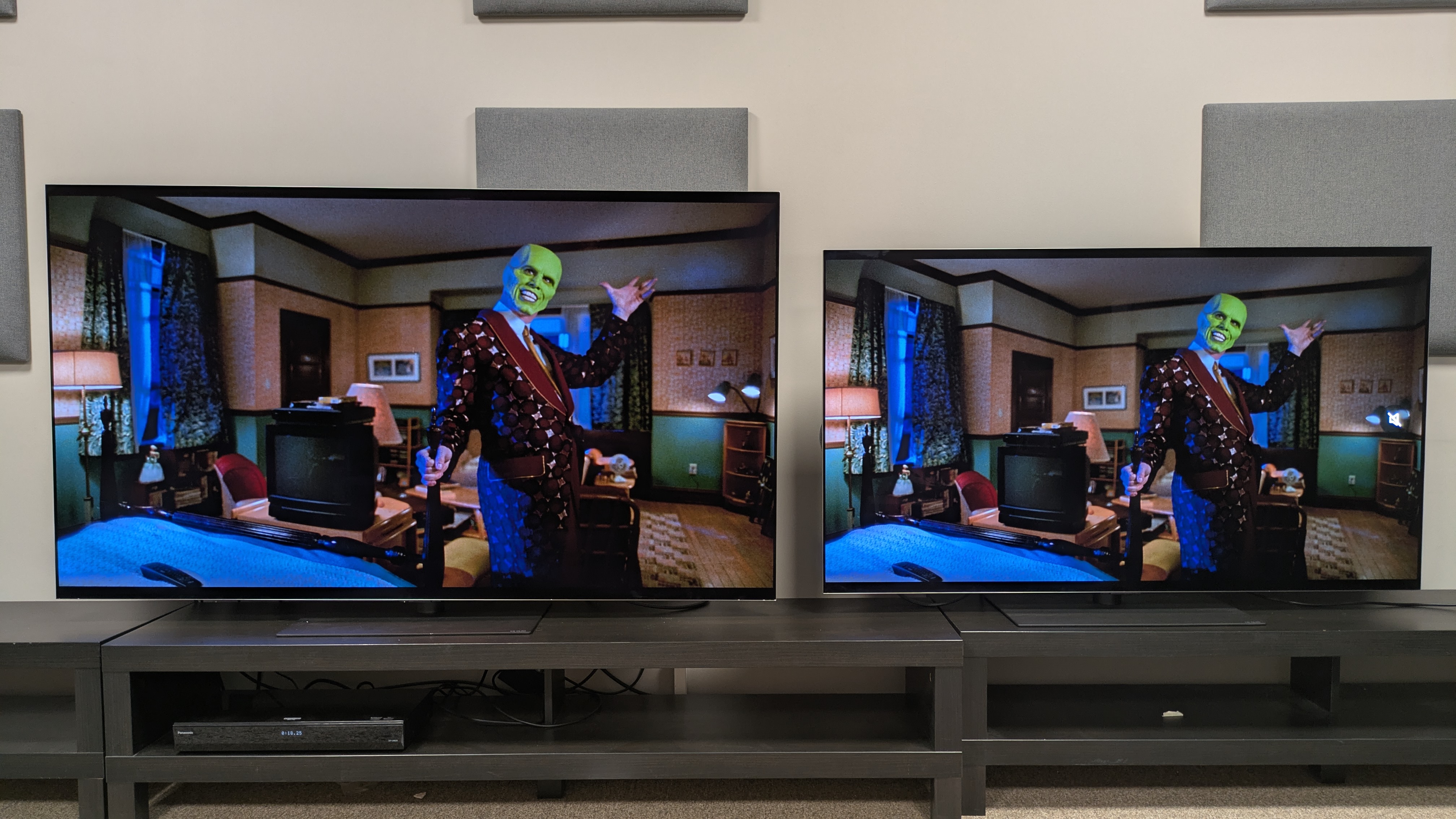
The G5’s AI Sound Pro mode was my choice during my testing last year, delivering good accuracy, a wide soundstage and some solid impact. The G6 comes with fewer sound presets — including lacking my previous go-to, which was Entertainment — so AI Sound Pro is the mode I used for both TVs.
While I’d still recommend one of the best soundbars with both TVs for audio that really matches the fidelity of the pictures, I decided to compare the two models’ built-in sound, because LG has changed things for the G6.
Using The Mask, I was surprised by just how different they were. The G6 has a much more forward, direct sound that focuses on the mid-range and low tones, creating a warmer profile. As The Mask is first introduced, any crashes and effects have more of an impact on the G6 compared to the G5. Both TVs have great sound mapping, accurately capturing the direction of sound as The Mask tornadoes around, moving across the screen.
Switching to The Batman’s Batmobile/Penguin chase scene, the G6 delivers much more bass, capturing the rumble of the Batmobile’s engine ignition sequence more accurately. The G6’s sound profile suits the scene more, with pinpoint precision of bullet sprays and squealing tyres and horns.
The G5 still has good positional accuracy and width, and it offers clear speech, but its more restrained sound doesn’t quite deliver on the same level as the G6.
LG G6: a big upgrade
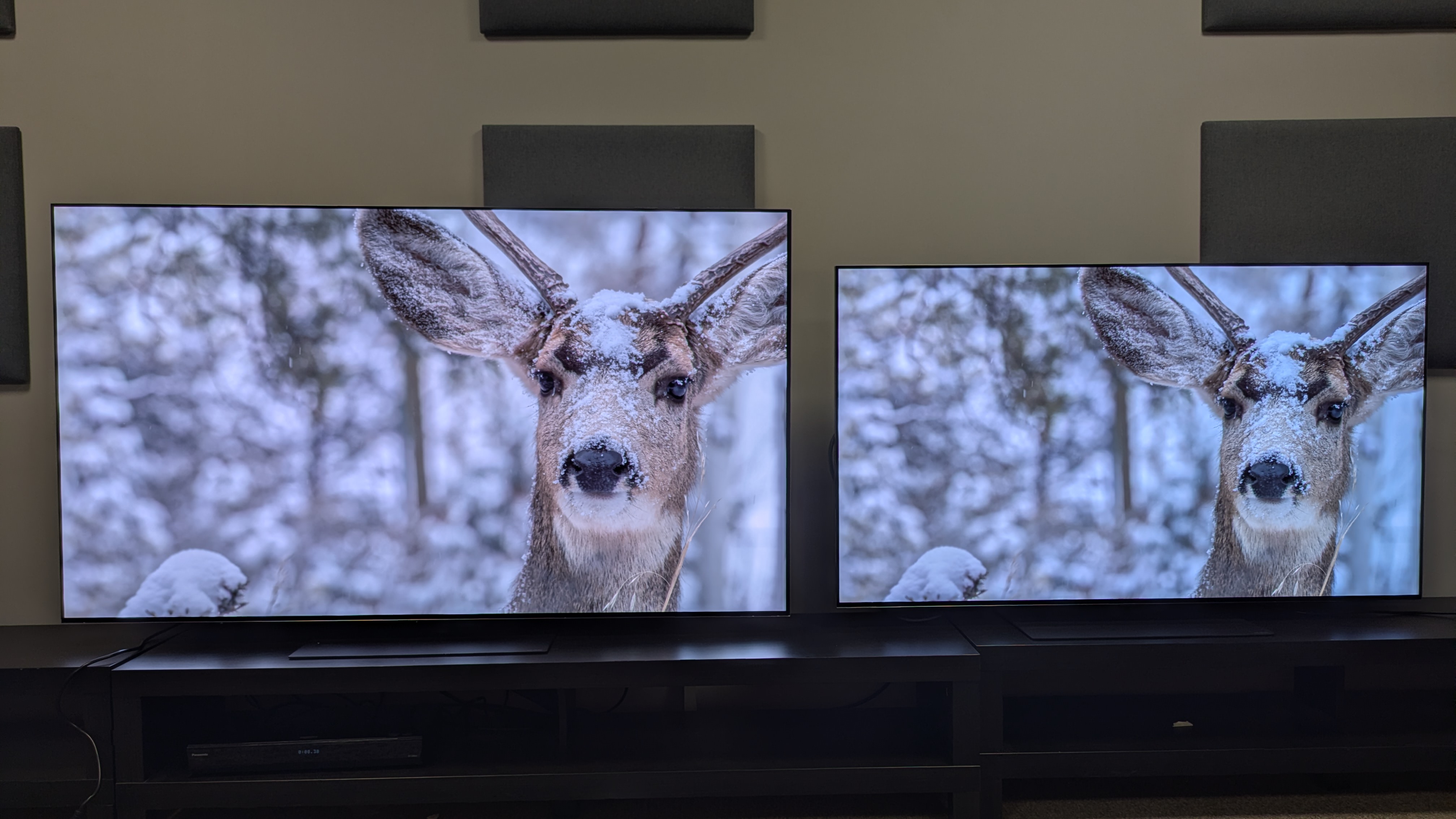
The G6 is a clear upgrade on the G5. The tweaked Filmmaker Mode delivers better color accuracy, more balanced contrast with richer black levels, a major fullscreen brightness boost, and crisper, more authentic textures. The G5 still has fantastic picture quality in its own right, but it’s impressive what LG has managed to do with the G6 in Filmmaker Mode
Under the hood, both these TVs have a list of features to match the best gaming TVs, with 4K 165Hz, total variable refresh rate support, Dolby Vision Gaming and very low latency. webOS is still one of the best smart TV platforms around, because it’s fairly intuitive and well laid out, even for those who like to experiment with settings.
The 65-inch G6 is set to launch for $3,399 (UK and Australia pricing TBA), which is the same as the G5’s launch price. The G5 is likely to be the more tempting option on price alone, because the 65-inch model is $2,199 / £2,249 / AU$3,189 right now, and honestly, the G5 is still a brilliant TV.
But, if you’re planning to upgrade your TV later in the year or even early next year, the G6 is well worth the wait, because it’s inevitable that its price will come down too.
Follow TechRadar on Google News and add us as a preferred source to get our expert news, reviews, and opinion in your feeds. Make sure to click the Follow button!
And of course, you can also follow TechRadar on YouTube and TikTok for news, reviews, unboxings in video form, and get regular updates from us on WhatsApp too.
